fijands
/ˈfi.jands/ · Gothic masculine nd-stem common noun
A Gothic masculine nd-stem noun conventionally glossed enemy. Project Wulfila currently exposes 26 candidates: three verified noun assignments, two further noun-only assignments, and 21 surface forms also listed under the living verb fijan. Ayora Estevan explains the collision diachronically: Proto-Germanic had already lexicalized the present-participial *fi(j)and- as enemy, while Gothic retained productive one-who-hates participles beside the noun. The five noun-only candidates use fiand, fijands, fijande, and fijandis; all five were inspected in Codex Argenteus facsimiles.
Lineage, to the limit of knowledge
5 steps from today back to *peh₁- (Proto-Indo-European). An asterisk marks a form reconstructed by comparison, never found written.
- Sound
- Gothic fijands continues the Germanic nd-stem formation with regular branch-level adaptation and Gothic inflection.
- Meaning
- The already lexicalized agent formation functions as the ordinary noun enemy while remaining formally close to a live participle.
- Authority
- Guus Kroonen · Daniel Ayora Estevan
- Confidence
- Cross-Germanic enemy nouns support inheritance; individual Gothic tokens can remain ambiguous with the participle.
- Chronology
- Proto-Germanic reconstruction into the Gothic textual tradition.
- supports Lemma fijands — Gothic enemy noun and 26-token candidate inventory (Project Wulfila editors · Wilhelm Streitberg, 2026), Lemma fijands, masculine nd-stem and complete 26-candidate inventorySupplies the Gothic noun, inflectional class, written forms, and bounded corpus statuses.
- supports Etymological Dictionary of Proto-Germanic — *fi(j)ēn- and *fi(j)and- (Guus Kroonen, 2013), p. 140, *fi(j)and- and Germanic descendantsIndependently publishes the reconstructed formation and descendant set.
- supports On the syntax of the Agent nouns in Gothic: the case of nd-formations (Daniel Ayora Estevan, 2023), p. 47 and note 24, Gothic fi(j)ands from Proto-Germanic *fi(j)and-Publishes the inherited lexicalized enemy formation and comparative parallels.
- Sound
- The present-participial nd-formation is built on the fi(j)- verb stem.
- Meaning
- One who hates lexicalizes as enemy before Gothic, while productive participial use survives beside the noun.
- Authority
- Daniel Ayora Estevan · Guus Kroonen
- Confidence
- The derivation and pre-Gothic lexicalization are published; the exact moment and every token’s category remain unrecoverable.
- Chronology
- Proto-Germanic derivation and lexicalization before the Gothic branch record.
- supports Etymological Dictionary of Proto-Germanic — *fi(j)ēn- and *fi(j)and- (Guus Kroonen, 2013), p. 140, *fi(j)and- from *fi(j)ēn-Publishes the Germanic word-formation relationship.
- supports On the syntax of the Agent nouns in Gothic: the case of nd-formations (Daniel Ayora Estevan, 2023), pp. 47–49, lexicalized enemy noun beside productive present participlesPublishes both the diachronic derivation and the surviving Gothic category overlap.
- Sound
- The proposed analysis connects the Germanic fi(j)- verb to a laryngeal-bearing Indo-European base through prehistoric present-stem remodeling; intermediate formal analyses vary and are not presented as written stages.
- Meaning
- A proposed harm, blame, suffering, or hostility field develops toward the Germanic verb hate, but the original semantic center is not uniquely recoverable.
- Authority
- Guus Kroonen
- Confidence
- The Proto-Germanic comparison is firmer than the displayed PIE route. The exact intermediate reconstruction and semantic unity remain analytical proposals.
- Chronology
- Proposed Proto-Indo-European base to Proto-Germanic reconstruction.
- supports Etymological Dictionary of Proto-Germanic — *fi(j)ēn- and *fi(j)and- (Guus Kroonen, 2013), p. 140, deeper etymological analysis of *fi(j)ēn-Publishes the proposed Indo-European route used here with reduced confidence.
- Sound
- No older form is promoted beyond the proposed *peh₁- comparison.
- Meaning
- The trail ends before enemy or evil spirit is reverse-engineered into one universal prehistoric concept.
- Authority
- SET-U editorial boundary · Guus Kroonen
- Confidence
- The deeper base is already proposed; no earlier node is treated as secure.
- supports Etymological Dictionary of Proto-Germanic — *fi(j)ēn- and *fi(j)and- (Guus Kroonen, 2013), p. 140, deepest published comparison used in this dossierSupports stopping after the qualified PIE proposal rather than inventing an earlier node.
Relatives
| Form | Language | Relation | Source |
|---|---|---|---|
| fijan | Gothic | the live class-III hate verb whose productive participle overlaps 21 noun candidates | Lemma fijan — Gothic dictionary and 42-token candidate inventory |
| fian | Gothic | the normalized j-less variant of fijan that helps explain fiand and fiands spellings | Lemma fian — redirect and historical dictionary variant |
| hatan | Gothic | a separate hate verb that exchanges enemies and those hating with fijan in two Luke passages | Gothic Bible word analysis — Luke 1:71, hatandane |
| fēond | Old English | a West Germanic enemy noun from the same lexicalized agent formation | An Anglo-Saxon Dictionary Online — feónd |
| fiend | English | the modern English continuation whose history includes enemy, foe, devil, and hostile-person senses | An Anglo-Saxon Dictionary Online — feónd |
| vijand | Dutch | a West Germanic enemy noun listed in the comparative historical entry | An Anglo-Saxon Dictionary Online — feónd |
| Feind | German | a West Germanic enemy noun listed in the comparative historical entry | An Anglo-Saxon Dictionary Online — feónd |
| fiand | Old Frisian | an Old Frisian enemy form continuing the lexicalized Germanic formation | On the syntax of the Agent nouns in Gothic: the case of nd-formations |
| fīunt | Old Dutch | an Old Dutch enemy form continuing the lexicalized Germanic formation | On the syntax of the Agent nouns in Gothic: the case of nd-formations |
| fīant | Old High German | an Old High German enemy form continuing the lexicalized Germanic formation | On the syntax of the Agent nouns in Gothic: the case of nd-formations |
| fjándi | Old Norse | a North Germanic enemy noun continuing the lexicalized participial formation | An Anglo-Saxon Dictionary Online — feónd |
| fíggindi | Faroese | a North Germanic enemy noun cited as evidence for pre-Gothic lexicalization | On the syntax of the Agent nouns in Gothic: the case of nd-formations |
| fiende | Danish | a North Germanic enemy noun listed in the comparative historical entry | An Anglo-Saxon Dictionary Online — feónd |
| fiende | Swedish | a North Germanic enemy noun listed in the comparative historical entry | An Anglo-Saxon Dictionary Online — feónd |
Journey
- Proto-Indo-European linguistic horizon · proposed *peh₁- comparisonA deeper harm, blame, suffering, or hate comparison is published, but the formal route and original semantic center remain proposed.
- Proto-Germanic linguistic horizon · *fi(j)ēn- hate verbThe reconstructed verb supplies the base for the active-participial enemy formation.
- Proto-Germanic linguistic horizon · lexicalized *fi(j)and- enemy formationCross-branch enemy nouns show that one who hates had lexicalized as enemy before the surviving Gothic record.
- Fourth-century Gothic translation tradition · fijands noun beside productive fijan participlesGothic retained both the inherited enemy noun and the live one-who-hates participle; 21 surviving candidates remain shared between them.
- Ravenna · early-sixth-century Codex Argenteus witnessesFive noun-only candidates were directly inspected on folios 3v, 27r, 123r, and 164v. The codex is evidence for written Gothic, not a speech-frequency sample.
- Werden, Ruhr district · sixteenth-century Codex Argenteus custodyThe directly inspected codex was known at a Benedictine monastery in Werden. This is evidence-object custody, not word diffusion.
- Prague · imperial custody by 1600 to 1648The codex was in Emperor Rudolph II’s Prague collection by 1600 and was taken by Swedish forces in 1648.
- Stockholm · Swedish royal custody after 1648The codex entered Queen Christina’s library before passing to Isaac Vossius.
- Holland custody · Isaac Vossius and acquisition by De la GardieVossius took the manuscript to Holland; Magnus Gabriel De la Gardie later acquired it.
- Uppsala University Library · custody since 1669De la Gardie presented the codex to Uppsala University. Modern facsimiles expose five noun-only tokens while Project Wulfila preserves the complete inventory.
- Knowledge boundary · beyond the proposed Indo-European comparisonNo single hater, enemy, devil, harm, blame, suffering, or hostility origin is promoted beyond the qualified route.
Disputes
Does the surviving corpus contain 26 secure noun tokens?
No. Project Wulfila exposes 26 candidates under fijands: three verified, two further noun-only but unverified, and 21 explicitly shared with the fijan verb inventory.
resolved · confidence: established · The site labels 26 as candidates, five as noun-only, and 21 as unresolved overlap.
- supports Lemma fijan — Gothic dictionary and 42-token candidate inventory (Project Wulfila editors · Wilhelm Streitberg, 2026), Twenty-one shared candidates under fijanConfirms the exact intersection with the verb inventory.
- supports Lemma fijands — Gothic enemy noun and 26-token candidate inventory (Project Wulfila editors · Wilhelm Streitberg, 2026), Occurrence inventory: three verified, two unambiguous, 21 ambiguousDefines the 26 noun candidates and status partition.
- supports Gothic Bible word analysis — Matthew 5:43, fiais and fiand (Project Wulfila editors · Wilhelm Streitberg, 2026), Matthew 5:43, fiand accusative singularDocuments the first verified noun-only token beside verbal fiais.
- supports Gothic Bible word analysis — Matthew 5:44, fijands (Project Wulfila editors · Wilhelm Streitberg, 2026), Matthew 5:44, fijands accusative pluralDocuments the second verified noun-only token.
- supports Gothic Bible word analysis — Matthew 10:36, fijands (Project Wulfila editors · Wilhelm Streitberg, 2026), Matthew 10:36, fijands nominative pluralDocuments the third verified noun-only token.
- supports Gothic Bible word analysis — Luke 1:74, fijande (Project Wulfila editors · Wilhelm Streitberg, 2026), Luke 1:74, fijande genitive pluralDocuments the first further unambiguous noun-only token.
- supports Gothic Bible word analysis — Luke 10:19, fijandis (Project Wulfila editors · Wilhelm Streitberg, 2026), Luke 10:19, fijandis genitive singularDocuments the second further unambiguous noun-only token.
Is fijands just an ordinary Gothic present participle?
No single category covers the evidence. Ayora Estevan derives the enemy noun from a Proto-Germanic lexicalized participle while also showing that Gothic retained productive present-participial uses of the same formation.
open · confidence: probable
- supports On the syntax of the Agent nouns in Gothic: the case of nd-formations (Daniel Ayora Estevan, 2023), pp. 47–49, lexicalized enemy noun and productive present participlePublishes both categories and their historical relationship.
- context Lemma fijands — Gothic enemy noun and 26-token candidate inventory (Project Wulfila editors · Wilhelm Streitberg, 2026), Lemma fijands, masculine nd-stemSupplies the synchronic noun classification.
Did one who hates lexicalize as enemy only inside Gothic?
No. Old Norse, Faroese, Old English, Old Frisian, Old Dutch, and Old High German enemy nouns require a pre-Gothic Germanic formation.
resolved · confidence: probable · The graph places *fi(j)and- at the Proto-Germanic level and Gothic fijands below it.
- supports Etymological Dictionary of Proto-Germanic — *fi(j)ēn- and *fi(j)and- (Guus Kroonen, 2013), p. 140, *fi(j)and- and descendantsIndependently publishes the Germanic formation.
- supports On the syntax of the Agent nouns in Gothic: the case of nd-formations (Daniel Ayora Estevan, 2023), p. 47 note 24, inherited enemy-noun parallels across GermanicSupports pre-Gothic lexicalization.
Can the nd-ending alone distinguish enemy from one who hates?
No. The noun and productive participle share surface inflection. Case, complementation, agreement, and context resolve some passages, but Project Wulfila leaves 21 candidates lexically and morphosyntactically ambiguous.
open · confidence: probable
- supports Lemma fijands — Gothic enemy noun and 26-token candidate inventory (Project Wulfila editors · Wilhelm Streitberg, 2026), Twenty-one not-verified and ambiguous candidatesDefines the unresolved residue.
- supports On the syntax of the Agent nouns in Gothic: the case of nd-formations (Daniel Ayora Estevan, 2023), pp. 48–49, Galatians 4:16, Romans 11:28, and Romans 12:9 diagnosticsShows how syntax disambiguates selected tokens.
Was fijands still transparently one who hates to Gothic speakers?
The formal relationship was available because the verb and productive participle survived, but inherited lexicalization means ordinary noun use need not have been compositionally reanalyzed on every occasion.
open · confidence: proposed
- supports On the syntax of the Agent nouns in Gothic: the case of nd-formations (Daniel Ayora Estevan, 2023), pp. 47–49, inherited noun beside live participle and verbEstablishes coexistence without directly reporting speaker intuitions.
- context Lemma fijan — Gothic dictionary and 42-token candidate inventory (Project Wulfila editors · Wilhelm Streitberg, 2026), Lemma fijan and surviving participial formsShows that the base verb and productive participle remained available.
Did Gothic fijands mean devil or evil spirit?
The reviewed Gothic noun inventory centers on enemy and regularly translates Greek echthros. Old English feónd developed or preserved devil senses, but that collateral history cannot be projected backward onto every Gothic occurrence.
resolved · confidence: established · The graph separates cognate branches and their semantic histories.
- supports Lemma fijands — Gothic enemy noun and 26-token candidate inventory (Project Wulfila editors · Wilhelm Streitberg, 2026), Lemma fijands and Streitberg gloss FeindDocuments the Gothic enemy gloss.
- context An Anglo-Saxon Dictionary Online — feónd (Joseph Bosworth · Thomas Northcote Toller · Christ Sean · Ondřej Tichy, 2014), Definition and etymology: enemy, foe, the devilDocuments a wider semantic range in the collateral Old English branch.
Is English fiend descended from Gothic fijands?
No. English fiend continues Old English feónd; Gothic fijands is a collateral Germanic cousin from the same reconstructed formation, not the donor of the English word.
resolved · confidence: established · The graph connects both branches at *fi(j)and- rather than drawing a Gothic-to-English arrow.
- supports On the syntax of the Agent nouns in Gothic: the case of nd-formations (Daniel Ayora Estevan, 2023), p. 47 note 24, Gothic and Old English as Germanic parallelsPlaces the forms on collateral branches.
- supports An Anglo-Saxon Dictionary Online — feónd (Joseph Bosworth · Thomas Northcote Toller · Christ Sean · Ondřej Tichy, 2014), Grammar and etymology from feónd through Middle English formsSupplies the direct English branch history.
Does *fi(j)and- securely descend from *peh₁-?
Only through the proposed deeper analysis of its Germanic verb base. The lexicalized participle-to-verb relation is stronger than the Indo-European route, whose intermediate morphology and semantic unity remain reconstructive.
open · confidence: proposed
- supports Etymological Dictionary of Proto-Germanic — *fi(j)ēn- and *fi(j)and- (Guus Kroonen, 2013), p. 140, deeper analysis of *fi(j)ēn-Publishes the proposed route while leaving it reconstructive.
- context On the syntax of the Agent nouns in Gothic: the case of nd-formations (Daniel Ayora Estevan, 2023), p. 47, lexicalized *fi(j)and- from *fi(j)ēn-Supports the firmer shallower relationship.
Do 26 candidates measure spoken Gothic frequency?
No. They measure a bounded fragmentary textual corpus with biblical translation effects, ambiguous lemma assignments, and duplicate manuscript witnesses.
resolved · confidence: established · The interface never calls the total all historical uses or a speech-frequency sample.
- supports Lemma fijands — Gothic enemy noun and 26-token candidate inventory (Project Wulfila editors · Wilhelm Streitberg, 2026), Bounded 26-candidate inventory and verification statusesDefines the surviving corpus measure.
- context Archivum Gothicum: Edition of the Gothic Sources, Volume 1 (Carla Falluomini · Pierandrea Gottardi, 2026), Gothic source and manuscript inventoryDocuments the fragmentary survival base.
Does the Codex Argenteus route map the geographic spread of fijands?
No. Werden, Prague, Stockholm, Holland, and Uppsala trace custody of evidence objects long after Gothic ceased to be a living vernacular in those places.
resolved · confidence: established · Post-Ravenna journey stages are labeled object custody rather than lexical diffusion.
- supports The history of Codex argenteus (Uppsala University Library, 2026), Codex argenteus’ journeyDocuments the post-copying custody route.
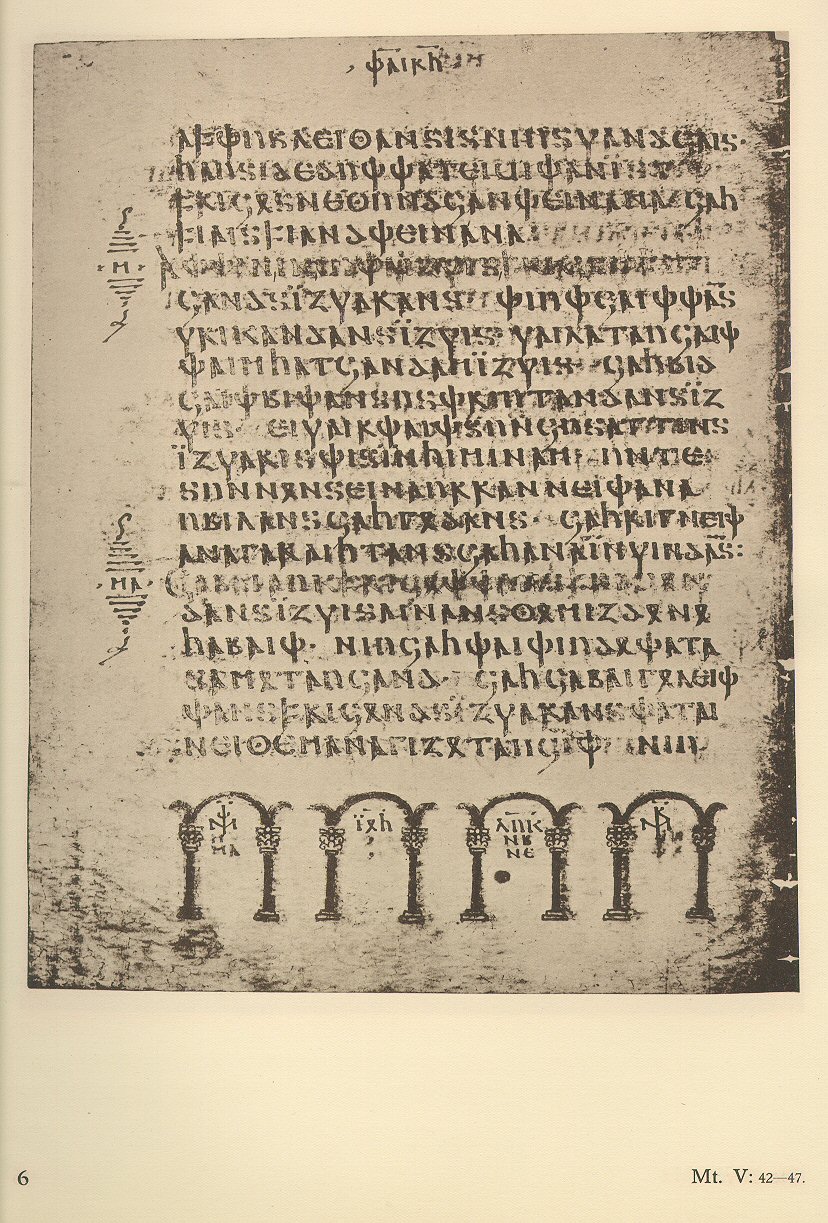
- context Codex Argenteus facsimile 6 — folio 3v, Matthew 5:42–47 (Uppsala University Library · Project Codex Argenteus Online, 1927), Folio 3v facsimileIdentifies two inspected noun-only tokens inside that route.
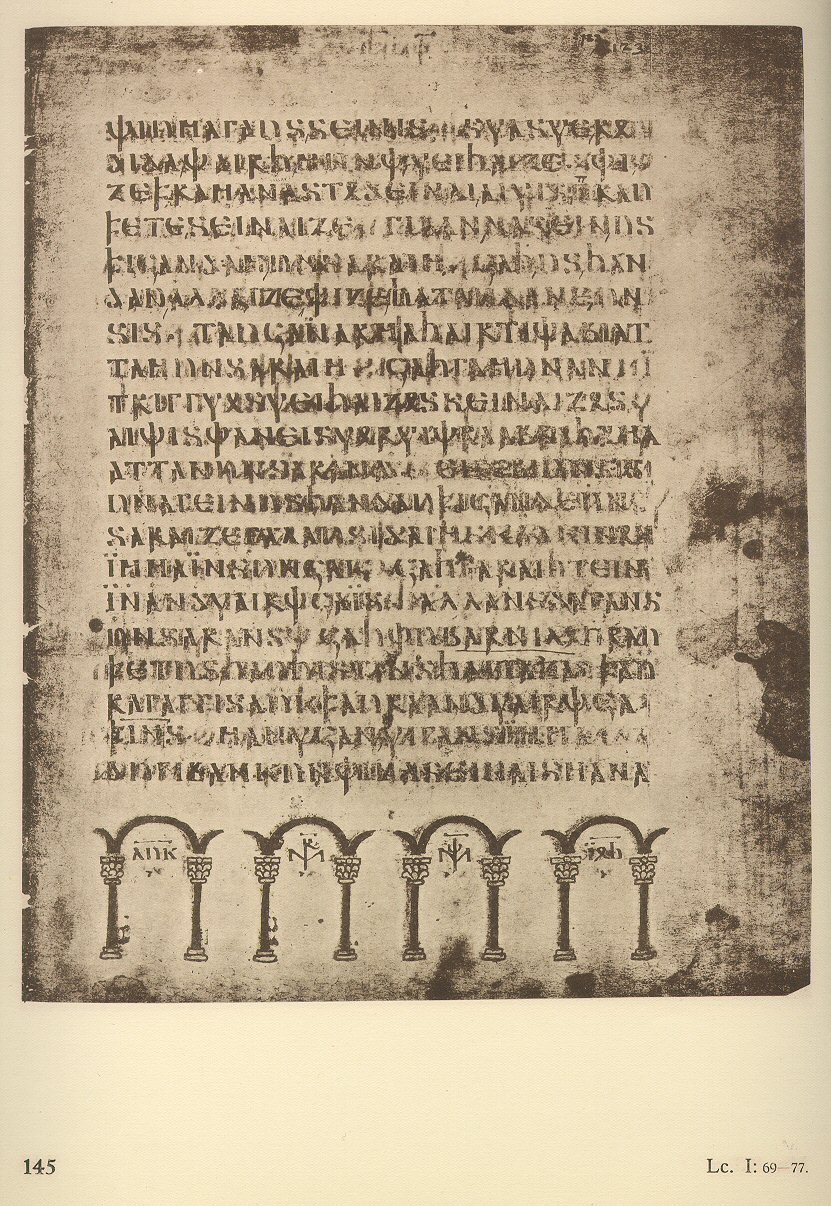
- context Codex Argenteus facsimile 145 — folio 123r, Luke 1:69–77 (Uppsala University Library · Project Codex Argenteus Online, 1927), Folio 123r facsimileIdentifies the fourth inspected noun-only token.
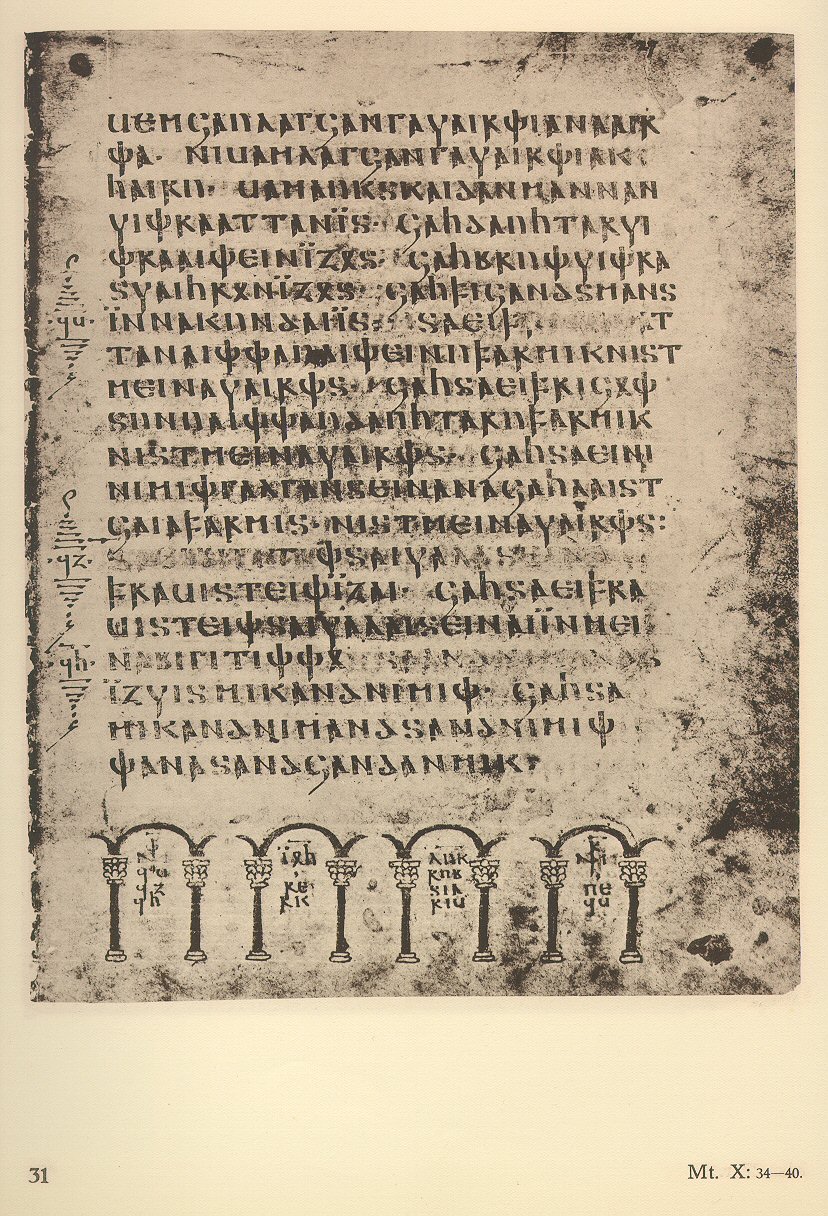
- context Codex Argenteus facsimile 31 — folio 27r, Matthew 10:34–40 (Uppsala University Library · Project Codex Argenteus Online, 1927), Folio 27r facsimileIdentifies the third inspected noun-only token.
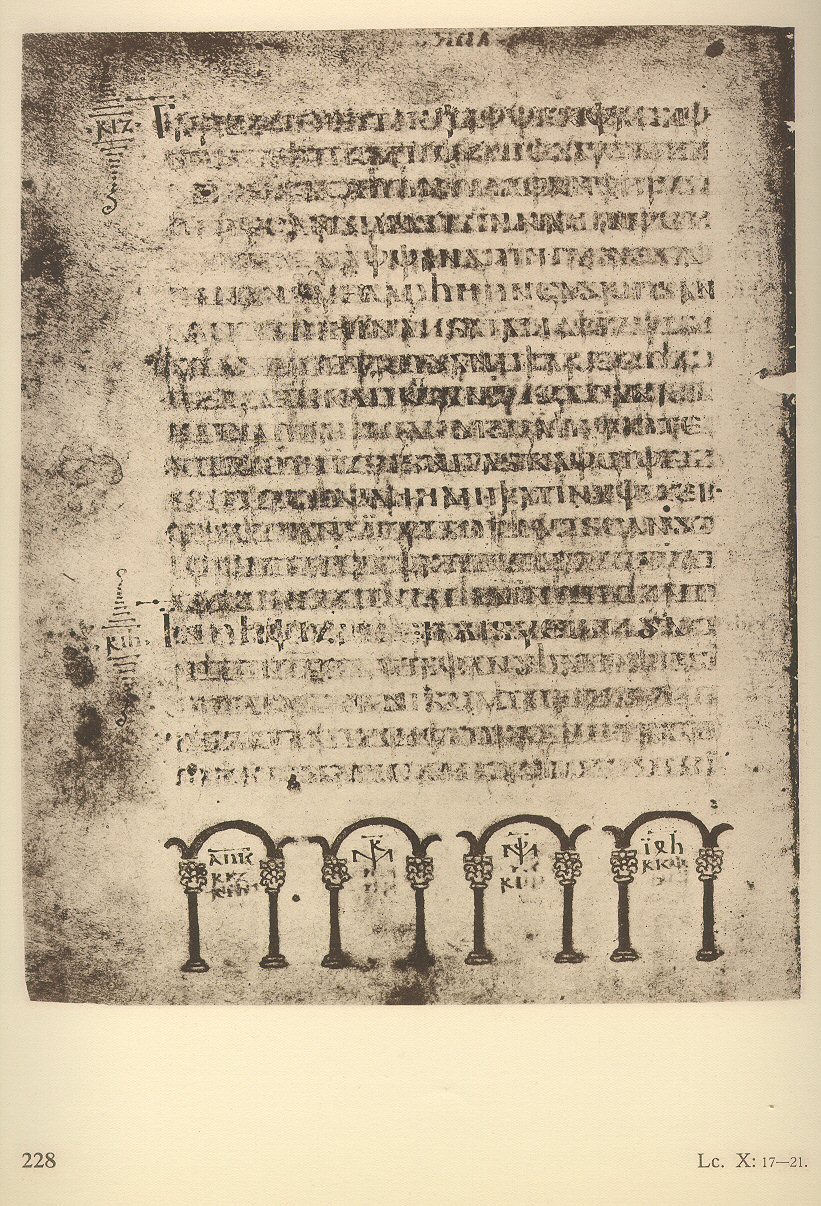
- context Codex Argenteus facsimile 228 — folio 164v, Luke 10:17–21 (Uppsala University Library · Project Codex Argenteus Online, 1927), Folio 164v facsimileIdentifies the fifth inspected noun-only token.
Are A, B, and Carolinus witnesses separate lexical usage events?
They are separate surviving manuscript tokens, but duplicate witnesses of one passage cannot be counted as independent acts of historical usage.
resolved · confidence: established · Attestations preserve each physical witness and explicitly reject frequency inference.
- supports Lemma fijands — Gothic enemy noun and 26-token candidate inventory (Project Wulfila editors · Wilhelm Streitberg, 2026), Romans 12:20, Philippians 3:18, Colossians 1:21, and 2 Thessalonians 3:15 siglaLists parallel manuscript witnesses as separate candidates.
- context Archivum Gothicum: Edition of the Gothic Sources, Volume 1 (Carla Falluomini · Pierandrea Gottardi, 2026), Gothic manuscript descriptionsExplains why A, B, and Carolinus are distinct physical witnesses.
Does the Luke lexical swap resolve the remaining 21 noun-participle candidates?
No. Luke 1:71 and 6:27 show that fijan and hatan can exchange the work of enemies and those hating, but those two contextual alignments do not determine every other fijand- token.
open · confidence: probable
- supports Gothic Bible word analysis — Luke 6:27, hatandans (Project Wulfila editors · Wilhelm Streitberg, 2026), Luke 6:27, hatandans for enemies and fijandam for those hatingDocuments the reversed side.
- supports Gothic Bible word analysis — Luke 1:71, hatandane (Project Wulfila editors · Wilhelm Streitberg, 2026), Luke 1:71, fijandam for enemies and hatandane for those hatingDocuments one side of the lexical swap.
- context Lemma fijands — Gothic enemy noun and 26-token candidate inventory (Project Wulfila editors · Wilhelm Streitberg, 2026), Twenty-one ambiguous candidates across the noun inventoryShows that the paired verses do not resolve the whole corpus.
Witnesses
- Gothic manuscript corpus, date not normalized Codex Ambrosianus A, Romans 8:7, Romans 8:7 [A], token fijands
source-reported“fijands”lexical_corpus_record · Lemma fijands — Gothic enemy noun and 26-token candidate inventory
- Gothic manuscript corpus, date not normalized Codex Ambrosianus A, Romans 12:20, Romans 12:20 [A], token fijand
source-reported“fijand”lexical_corpus_record · Lemma fijands — Gothic enemy noun and 26-token candidate inventory
- Gothic manuscript corpus, date not normalized Codex Carolinus, Romans 12:20, Romans 12:20 [Car], token fijand
source-reported“fijand”lexical_corpus_record · Lemma fijands — Gothic enemy noun and 26-token candidate inventory
- Gothic manuscript corpus, date not normalized Codex Ambrosianus A, 1 Corinthians 15:25, 1 Corinthians 15:25 [A], token fijands
source-reported“fijands”lexical_corpus_record · Lemma fijands — Gothic enemy noun and 26-token candidate inventory
- Gothic manuscript corpus, date not normalized Codex Ambrosianus A, 1 Corinthians 15:26, 1 Corinthians 15:26 [A], token fijands
source-reported“fijands”lexical_corpus_record · Lemma fijands — Gothic enemy noun and 26-token candidate inventory
- Gothic manuscript corpus, date not normalized Codex Ambrosianus A, Galatians 4:16, Galatians 4:16 [A], token fijands
source-reported“fijands”lexical_corpus_record · Gothic Bible word analysis — Galatians 4:16, fijands
- Gothic manuscript corpus, date not normalized Codex Ambrosianus A, Philippians 3:18, Philippians 3:18 [A], token fijands
source-reported“fijands”lexical_corpus_record · Lemma fijands — Gothic enemy noun and 26-token candidate inventory
- Gothic manuscript corpus, date not normalized Codex Ambrosianus B, Philippians 3:18, Philippians 3:18 [B], token fijands
source-reported“fijands”lexical_corpus_record · Lemma fijands — Gothic enemy noun and 26-token candidate inventory
- Gothic manuscript corpus, date not normalized Codex Ambrosianus A, Colossians 1:21, Colossians 1:21 [A], token fijands
source-reported“fijands”lexical_corpus_record · Lemma fijands — Gothic enemy noun and 26-token candidate inventory
- Gothic manuscript corpus, date not normalized Codex Ambrosianus B, Colossians 1:21, Colossians 1:21 [B], token fijands
source-reported“fijands”lexical_corpus_record · Lemma fijands — Gothic enemy noun and 26-token candidate inventory
- Gothic manuscript corpus, date not normalized Codex Ambrosianus A, 2 Thessalonians 3:15, 2 Thessalonians 3:15 [A], token fijand
source-reported“fijand”lexical_corpus_record · Lemma fijands — Gothic enemy noun and 26-token candidate inventory
- Gothic manuscript corpus, date not normalized Codex Ambrosianus B, 2 Thessalonians 3:15, 2 Thessalonians 3:15 [B], token fijand
source-reported“fijand”lexical_corpus_record · Lemma fijands — Gothic enemy noun and 26-token candidate inventory
- Gothic manuscript corpus, date not normalized Codex Ambrosianus D, Nehemiah 6:16, Nehemiah 6:16 [D], token fiands
source-reported“fiands”lexical_corpus_record · Lemma fijands — Gothic enemy noun and 26-token candidate inventory
- early 6th century Codex Argenteus, Matthew 5:43, DG 1, fol. 3v; facsimile 6; Matthew 5:43; line containing “jah fiais fiand þeinana”
directly inspected“jah fiais fiand þeinana”manuscript · Uppsala University Library · DG 1, fol. 3v · facsimile · Codex Argenteus facsimile 6 — folio 3v, Matthew 5:42–47
- early 6th century Codex Argenteus, Matthew 5:44, DG 1, fol. 3v; facsimile 6; Matthew 5:44; line containing “frijoþ fijands izwarans”
directly inspected“frijoþ fijands izwarans”manuscript · Uppsala University Library · DG 1, fol. 3v · facsimile · Codex Argenteus facsimile 6 — folio 3v, Matthew 5:42–47
- early 6th century Codex Argenteus, Matthew 10:36, DG 1, fol. 27r; facsimile 31; Matthew 10:36; line containing “jah fijands mans innakundai is”
directly inspected“jah fijands mans innakundai is”manuscript · Uppsala University Library · DG 1, fol. 27r · facsimile · Codex Argenteus facsimile 31 — folio 27r, Matthew 10:34–40
- early 6th century Codex Argenteus, Luke 1:74, DG 1, fol. 123r; facsimile 145; Luke 1:74; line containing “us handau fijande unsaraize”
directly inspected“unagein us handau fijande unsaraize”manuscript · Uppsala University Library · DG 1, fol. 123r · facsimile · Codex Argenteus facsimile 145 — folio 123r, Luke 1:69–77
- early 6th century Codex Argenteus, Luke 10:19, DG 1, fol. 164v; facsimile 228; Luke 10:19; line containing “ana allai mahtai fijandis”
directly inspected“jah ana allai mahtai fijandis”manuscript · Uppsala University Library · DG 1, fol. 164v · facsimile · Codex Argenteus facsimile 228 — folio 164v, Luke 10:17–21
- early 6th-century candidate, source-reported Codex Argenteus, Luke 1:71, Luke 1:71 [CA], token fijandam
source-reported“fijandam”lexical_corpus_record · Lemma fijands — Gothic enemy noun and 26-token candidate inventory
- early 6th-century candidate, source-reported Codex Argenteus, Luke 6:22, Luke 6:22 [CA], token fijand
source-reported“fijand”lexical_corpus_record · Gothic Bible word analysis — Luke 6:22, fijand
- early 6th-century candidate, source-reported Codex Argenteus, Luke 6:27, Luke 6:27 [CA], token fijandam
source-reported“fijandam”lexical_corpus_record · Lemma fijands — Gothic enemy noun and 26-token candidate inventory
- early 6th-century candidate, source-reported Codex Argenteus, Luke 6:35, Luke 6:35 [CA], token fijands
source-reported“fijands”lexical_corpus_record · Lemma fijands — Gothic enemy noun and 26-token candidate inventory
- early 6th-century candidate, source-reported Codex Argenteus, Luke 19:27, Luke 19:27 [CA], token fijands
source-reported“fijands”lexical_corpus_record · Lemma fijands — Gothic enemy noun and 26-token candidate inventory
- early 6th-century candidate, source-reported Codex Argenteus, Luke 19:43, Luke 19:43 [CA], token fijands
source-reported“fijands”lexical_corpus_record · Lemma fijands — Gothic enemy noun and 26-token candidate inventory
- early 6th-century candidate, source-reported Codex Argenteus, Luke 20:43, Luke 20:43 [CA], token fijands
source-reported“fijands”lexical_corpus_record · Lemma fijands — Gothic enemy noun and 26-token candidate inventory
- early 6th-century candidate, source-reported Codex Argenteus, Mark 12:36, Mark 12:36 [CA], token fijands
source-reported“fijands”lexical_corpus_record · Lemma fijands — Gothic enemy noun and 26-token candidate inventory
Data for this word: every dataset (JSON, CSV, SQLite).