hatan
/ˈha.tan/ · Gothic class-III weak-verb lemma
A Gothic weak verb conventionally glossed hate, represented by exactly two currently reported corpus tokens: hatandane in Luke 1:71 and hatandans in Luke 6:27. Both are present participles; no surviving token writes the normalized infinitive. Their translation behavior defeats a one-word gloss: Luke 1 uses fijandam for enemies and hatandane for those hating, while Luke 6 uses hatandans for enemies and fijandam for those hating. Project Wulfila keeps class-III hatan separate from class-I hatjan, Braune calls the forms conjugational fluctuation, Orel publishes a reconstructed class-III alternation, and Sturtevant argues that the hatan shape may instead be a specifically Gothic secondary formation.
Lineage, to the limit of knowledge
6 steps from today back to *ḱeh₂d- (Proto-Indo-European). An asterisk marks a form reconstructed by comparison, never found written.
- Sound
- On the inherited analysis, Gothic h and the hat- stem continue the Germanic forms Orel writes with x, while the Gothic class-III paradigm is compared with the reconstructed *xatēnan ~ *xatōjanan alternation.
- Meaning
- The Germanic weak-verb family meaning hate continues in the two surviving Gothic participles, one of which is substantivized as enemies.
- Authority
- Vladimir Orel · Project Wulfila editors
- Confidence
- The comparative family is published, but the exact reconstruction varies and Sturtevant argues that Gothic hatan may be a secondary formation beside hatjan rather than a straightforward inherited class-III reflex.
- Chronology
- Proto-Germanic reconstruction into the fourth-century Gothic translation tradition and surviving early-sixth-century manuscript.
- supports A Handbook of Germanic Etymology — *xataz, *xatjanan, and *xatōjanan (Vladimir Orel, 2003), p. 203, *xatēnan ~ *xatōjanan and Germanic cognate verbsPublishes the inherited comparative reconstruction and branch set.
- supports Lemma hatan — Gothic dictionary and occurrence inventory (Project Wulfila editors · Wilhelm Streitberg, 2026), Lemma hatan, class sw.V.3 and two-token occurrence inventoryIdentifies the class-III Gothic lexeme and its complete current corpus count.
- challenges A Gothic Grammar with Selections for Reading and a Glossary — hatan and hatjan (Wilhelm Braune · translated and edited by Gerhard H. Balg, 1895), §§191–193 and note: class-III -ai- distribution; hatan fluctuates with class-I hatjanTreats the Gothic forms as conjugational fluctuation rather than a clean separate inheritance.
- supports Die gotische Bibel — Wörterbuch entry hatan (Wilhelm Streitberg, 1910), Wörterbuch entry hatan sw.V.3 hassenIndependently supplies the historical dictionary lemma, class, and gloss.
- challenges Notes on Gothic Forms — Hatan : hatjan “to hate” (Albert Morey Sturtevant, 1954), p. 452, Hatan : hatjan “to hate”Argues that a specifically Gothic secondary origin is more probable and notes that hatan occurs only in the present participle.
- Sound
- Orel groups the weak-verb reconstruction with the Germanic hate-noun base he represents as *xataz ~ *xatez; the graph crosswalks that base to its reviewed *hatiz- node.
- Meaning
- A noun family for hate or enmity supplies or associates with weak verbs whose daughter branches express hating, hostility, pursuit, and anger.
- Authority
- Vladimir Orel · Merriam-Webster Editors
- Confidence
- The lexical family is secure, but the exact formation of class-III hatan and the direction of any specifically Gothic remodeling remain disputed.
- Chronology
- Related Proto-Germanic reconstructed formations rather than independently dated words.
- context Hate — definition, etymology, and first known use (Merriam-Webster Editors, 2026), Noun etymology: Germanic *hatiz- and derived weak verbSupplies the atlas representation of the corresponding Germanic noun base.
- supports A Handbook of Germanic Etymology — *xataz, *xatjanan, and *xatōjanan (Vladimir Orel, 2003), p. 203, *xataz ~ *xatez beside *xatēnan ~ *xatōjananPublishes the noun and weak-verb formations together in the Germanic family.
- Sound
- Under the proposed comparison, Grimm’s Law maps Indo-European *ḱ to Germanic h and *d to Germanic t, while the suffixal formation is remodeled as the Germanic i-stem.
- Meaning
- A proposed grief, pain, care, or hatred formation narrows or develops into the Germanic hate and enmity family.
- Authority
- Merriam-Webster Editors · Anatoly Liberman
- Confidence
- Merriam-Webster says “perhaps” and calls the semantic relations far from transparent; Liberman argues that several proposed non-Germanic cognates may not belong together.
- Chronology
- Proto-Indo-European proposal to Proto-Germanic reconstruction.
- supports Hate — definition, etymology, and first known use (Merriam-Webster Editors, 2026), Noun etymology and semantic notePublishes the qualified PIE comparison and its lack of semantic transparency.
- challenges The shortest history of hatred continued and partly concluded (Anatoly Liberman, 2018), Non-Germanic comparison and conclusionQuestions whether the proposed members form one secure semantic family.
- Sound
- The proposed zero-grade or reduced root formation *ḱh₂d-es- is analyzed from the full-grade base *ḱeh₂d- with suffixation.
- Meaning
- The source groups grief, pain, care, mourning, and hatred meanings, but no single original semantic path is promoted.
- Authority
- Merriam-Webster Editors
- Confidence
- The formal analysis is published, while the semantic unity remains expressly difficult.
- Chronology
- Two analytical reconstructed levels, not independently attested spoken tokens.
- supports Hate — definition, etymology, and first known use (Merriam-Webster Editors, 2026), Reconstructed formation and basePublishes the two proposed PIE analytical levels.
- Sound
- No older form or uniquely recoverable concrete meaning is promoted beyond the disputed *ḱeh₂d- proposal.
- Meaning
- The trail ends before the surviving translation alternation is reverse-engineered into a universal origin for hate, enemy, grief, care, pursuit, or persecution.
- Authority
- SET-U editorial boundary · Anatoly Liberman
- Confidence
- Secure comparison ends at Germanic; the displayed PIE route remains qualified and semantically unresolved.
- supports Hate — definition, etymology, and first known use (Merriam-Webster Editors, 2026), Semantic-transparency noteMarks the deep comparison as nontransparent.
- supports The shortest history of hatred continued and partly concluded (Anatoly Liberman, 2018), Qualified conclusionSupports stopping rather than inventing a single prehistoric emotional or action scene.
Relatives
| Form | Language | Relation | Source |
|---|---|---|---|
| hatandane | Gothic | the Luke 1:71 genitive-plural present participle, formally masculine or neuter and contextually substantivized for those hating | Gothic Bible word analysis — Luke 1:71, hatandane |
| hatandans | Gothic | the Luke 6:27 masculine nominative- or accusative-plural present participle, contextually accusative after þans | Gothic Bible word analysis — Luke 6:27, hatandans |
| hatjan | Gothic | the class-I hate verb that Braune treats as fluctuation and Sturtevant uses in a secondary-Gothic account | Notes on Gothic Forms — Hatan : hatjan “to hate” |
| hatis | Gothic | the related hate or wrath noun in the Germanic lexical family | A Handbook of Germanic Etymology — *xataz, *xatjanan, and *xatōjanan |
| hatizōn | Gothic | a related class-II denominative meaning be angry | Gothic Online, Lesson 8 — hatis and denominative hatizōn |
| fijan | Gothic | the other Gothic hate verb whose participle trades translation roles with hatan across Luke 1:71 and 6:27 | Notes on Gothic Forms — Hatan : hatjan “to hate” |
| fijands | Gothic | the enemy formation represented by fijandam in both comparison passages | Gothic Bible word analysis — Luke 1:71, hatandane |
| hatian | Old English | a cognate weak hate verb in Orel’s reconstructed class-III or related formation | A Handbook of Germanic Etymology — *xataz, *xatjanan, and *xatōjanan |
| hatan | Old Saxon | a class-III Germanic cognate verb meaning hate | A Handbook of Germanic Etymology — *xataz, *xatjanan, and *xatōjanan |
| hata | Old Norse | a class-III Germanic cognate verb meaning hate | A Handbook of Germanic Etymology — *xataz, *xatjanan, and *xatōjanan |
| hatia | Old Frisian | a class-III Germanic cognate verb meaning hate | A Handbook of Germanic Etymology — *xataz, *xatjanan, and *xatōjanan |
| hazzōn | Old High German | a Germanic cognate verb meaning hate | A Handbook of Germanic Etymology — *xataz, *xatjanan, and *xatōjanan |
| hassen | German | the modern German hate verb in the wider inherited family | hetzen — Rechtschreibung, Bedeutung, Definition, Herkunft |
| hate | English | a modern cousin reached through the distinct Old English branch | Hate — definition, etymology, and first known use |
Journey
- Proto-Germanic linguistic horizon · *xatēnan ~ *xatōjananOrel’s Gothic, Old English, Old Frisian, Old Saxon, Old Norse, and Old High German comparison supports a Germanic verb family, while the exact reconstruction and the possibility of specifically Gothic remodeling remain disputed.
- Fourth-century Gothic translation tradition · hatan represented by two participlesLuke 1:71 and Luke 6:27 belong to the Gothic Gospel translation tradition. Their lexical swap reveals translation behavior but does not date the first spoken use or prove that the construction was newly coined.
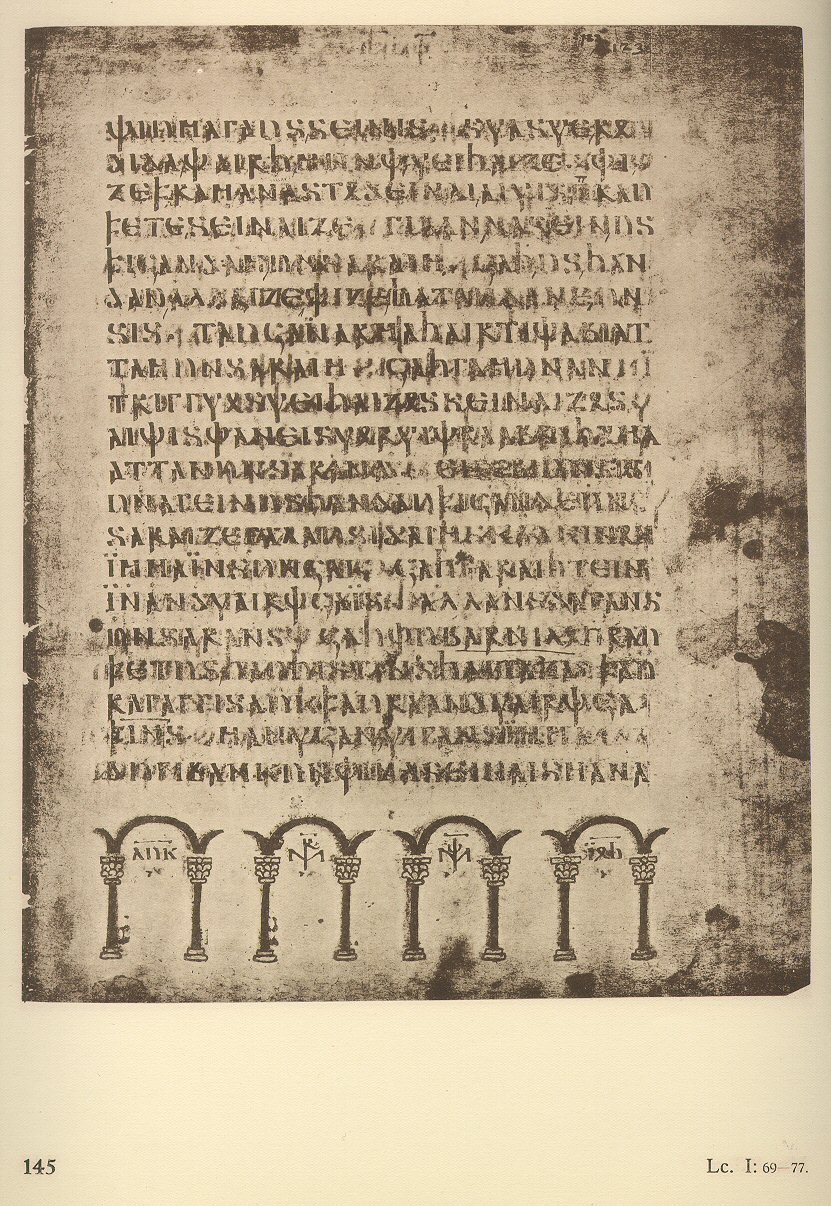
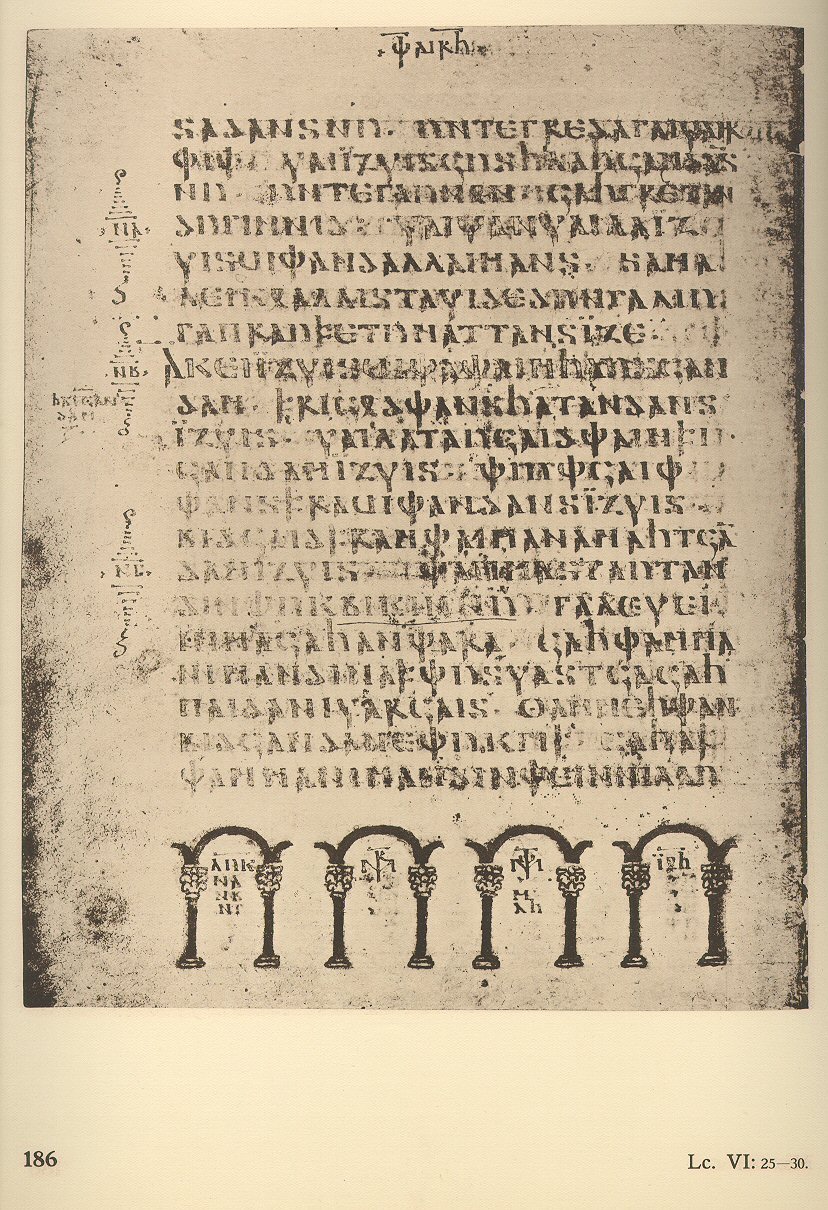
- Ravenna · early-sixth-century Codex Argenteus witnessesBoth directly inspected participles occur in the purple-vellum Gospel codex probably copied in Ravenna: hatandane on folio 123r and hatandans on folio 143v.
- Werden, Ruhr district · sixteenth-century manuscript custodyThe codex was known in the sixteenth century at a Benedictine monastery in Werden. This is the route of the evidence object, not proof that spoken Gothic traveled with it.
- Prague · imperial custody by 1600 to 1648By 1600 the codex was in Prague in the hands of Emperor Rudolph II; Swedish forces took it when they stormed the city in 1648.
- Stockholm · Swedish royal custody after 1648The codex reached Stockholm as spoil of war and entered Queen Christina’s library before passing to Isaac Vossius.
- Holland custody · Isaac Vossius and acquisition by De la GardieVossius took the manuscript to Holland; Magnus Gabriel De la Gardie later bought it and presented it to Uppsala University.
- Uppsala University Library · custody since 1669De la Gardie presented the codex to Uppsala University in 1669. Modern facsimiles expose both folios while Project Wulfila supplies the aligned corpus analyses.
- Knowledge boundary · beyond secure Germanic reconstructionThe proposed Indo-European comparison remains visible, but no single enemy, hate, grief, care, pursuit, persecution, or translation origin is promoted.
Disputes
Is the infinitive hatan written in the surviving corpus?
No. The two surviving forms are hatandane and hatandans, both present participles. Hatan is the normalized dictionary citation form assigned by Project Wulfila and the historical grammars.
resolved · confidence: established · The dossier labels the lexeme attested through two inflected tokens and never quotes the infinitive as manuscript text.
- supports Lemma hatan — Gothic dictionary and occurrence inventory (Project Wulfila editors · Wilhelm Streitberg, 2026), Lemma hatan and two-token occurrence inventoryDistinguishes the normalized lemma from both written participles.
- supports Gothic Bible word analysis — Luke 6:27, hatandans (Project Wulfila editors · Wilhelm Streitberg, 2026), Luke 6:27, morphology of hatandansIdentifies the second token as a present participle.
- supports Gothic Bible word analysis — Luke 1:71, hatandane (Project Wulfila editors · Wilhelm Streitberg, 2026), Luke 1:71, morphology of hatandaneIdentifies the first token as a present participle.
Does Gothic preserve exactly two historical uses of hatan?
Project Wulfila currently reports exactly two surviving corpus tokens assigned to the lemma. That count does not include lost manuscripts, spoken Gothic, unrecognized variants, or every use in history.
resolved · confidence: established · Every count is explicitly bounded to the currently reported surviving corpus.
- supports Lemma hatan — Gothic dictionary and occurrence inventory (Project Wulfila editors · Wilhelm Streitberg, 2026), Complete occurrence inventory: hatandane and hatandansDefines the exact bounded corpus count.
- context Archivum Gothicum: Edition of the Gothic Sources, Volume 1 (Carla Falluomini · Pierandrea Gottardi, 2026), Gothic source and manuscript inventoryDocuments the limited survival base that prevents a total historical-use claim.
Are hatan and hatjan two Gothic verbs or one fluctuating paradigm?
The sources preserve different analytical levels. Project Wulfila gives separate class-III and class-I lemmas; Orel publishes distinct comparative formations. Braune says hatan fluctuates with class-I hatjan, while Sturtevant proposes a specifically Gothic secondary explanation.
open · confidence: probable
- supports Lemma hatjan — Gothic dictionary and occurrence inventory (Project Wulfila editors · Wilhelm Streitberg, 2026), Lemma hatjan, sw.V.1-jSeparates the class-I lemma.
- supports Lemma hatan — Gothic dictionary and occurrence inventory (Project Wulfila editors · Wilhelm Streitberg, 2026), Lemma hatan, sw.V.3Separates the class-III lemma.
- challenges A Gothic Grammar with Selections for Reading and a Glossary — hatan and hatjan (Wilhelm Braune · translated and edited by Gerhard H. Balg, 1895), §193 note: hatan fluctuates with class-I hatjanTreats the forms as conjugational fluctuation.
- challenges Notes on Gothic Forms — Hatan : hatjan “to hate” (Albert Morey Sturtevant, 1954), p. 452, Hatan : hatjan “to hate”Develops a specifically Gothic secondary account.
- context A Handbook of Germanic Etymology — *xataz, *xatjanan, and *xatōjanan (Vladimir Orel, 2003), p. 203, separate *xatjanan and *xatēnan ~ *xatōjanan entriesPublishes distinct comparative formations.
Do the written endings alone settle the participles’ case and gender?
No. Project Wulfila gives masculine or neuter genitive plural for hatandane and masculine nominative or accusative plural for hatandans. The clauses resolve the contextual readings through syntax and Greek alignment, but the surface forms remain formally syncretic.
open · confidence: probable
- supports Gothic Bible word analysis — Luke 6:27, hatandans (Project Wulfila editors · Wilhelm Streitberg, 2026), Luke 6:27, masculine nominative- or accusative-plural analyses for hatandansPublishes the formal ambiguity and contextual verse.
- supports Gothic Bible word analysis — Luke 1:71, hatandane (Project Wulfila editors · Wilhelm Streitberg, 2026), Luke 1:71, masculine or neuter genitive-plural analyses for hatandanePublishes the formal ambiguity and contextual verse.
Does hatan map one-to-one to Greek miseō, hate?
No. Luke 1:71 aligns hatandane with Greek misountōn, those hating, but Luke 6:27 aligns hatandans with echthrous, enemies. A dictionary gloss cannot replace verse-level lexical alignment.
resolved · confidence: established · The dossier records contextual equivalents rather than assigning one timeless source-language gloss.
- supports Gothic Bible word analysis — Luke 6:27, hatandans (Project Wulfila editors · Wilhelm Streitberg, 2026), Luke 6:27, hatandans aligned with Greek echthrousDocuments the enemies correspondence.
- supports Gothic Bible word analysis — Luke 1:71, hatandane (Project Wulfila editors · Wilhelm Streitberg, 2026), Luke 1:71, hatandane aligned with Greek misountōnDocuments the those-hating correspondence.
Are hatan and fijan perfect synonyms?
They overlap in the Gothic hate field, but the surviving passages do not prove total synonymy. Luke 1 uses fijandam for enemies and hatandane for those hating; Luke 6 reverses those constructional roles. Sturtevant treats semantic association as relevant to formal association, not as proof that every sense and construction was identical.
open · confidence: probable
- supports Gothic Bible word analysis — Luke 6:27, hatandans (Project Wulfila editors · Wilhelm Streitberg, 2026), Luke 6:27, hatandans for enemies and fijandam for those hatingDocuments the reversed constructional assignment.
- supports Gothic Bible word analysis — Luke 1:71, hatandane (Project Wulfila editors · Wilhelm Streitberg, 2026), Luke 1:71, fijandam for enemies and hatandane for those hatingDocuments one constructional assignment.
- context Notes on Gothic Forms — Hatan : hatjan “to hate” (Albert Morey Sturtevant, 1954), p. 452, semantic association of fijan and hatan in the formal argumentTreats semantic overlap as part of an analogical explanation without providing a complete synonym inventory.
Was hatan inherited unchanged from Proto-Germanic?
Possibly, not securely. Orel publishes *xatēnan ~ *xatōjanan behind a Germanic cognate set. Sturtevant instead judges a specifically Gothic secondary origin more probable, and Braune records fluctuation with hatjan.
open · confidence: proposed
- supports A Handbook of Germanic Etymology — *xataz, *xatjanan, and *xatōjanan (Vladimir Orel, 2003), p. 203, *xatēnan ~ *xatōjanan and Germanic cognatesPublishes the inherited comparative route.
- challenges A Gothic Grammar with Selections for Reading and a Glossary — hatan and hatjan (Wilhelm Braune · translated and edited by Gerhard H. Balg, 1895), §193 note: fluctuation between class III and class IPreserves the internal-paradigm account.
- challenges Notes on Gothic Forms — Hatan : hatjan “to hate” (Albert Morey Sturtevant, 1954), p. 452, specifically Gothic secondary origin judged more probablePublishes a direct alternative to uncomplicated inheritance.
Do two surviving tokens prove hatan was rare in spoken Gothic?
No. They measure a bounded and fragmentary textual corpus, not ordinary speech, lost texts, genre distribution, or competition among Gothic hate verbs.
resolved · confidence: established · The interface says two reported corpus tokens, never two historical uses or a speech-frequency estimate.
- supports Lemma hatan — Gothic dictionary and occurrence inventory (Project Wulfila editors · Wilhelm Streitberg, 2026), Two-token occurrence inventoryDefines what the surviving count actually measures.
- context Archivum Gothicum: Edition of the Gothic Sources, Volume 1 (Carla Falluomini · Pierandrea Gottardi, 2026), Manuscript inventory and edition descriptionDocuments the fragmentary Gothic textual record.
Does the Codex Argenteus route map the spread of hatan?
No. It maps custody of the two directly inspected evidence objects. The codex traveled through Werden, Prague, Stockholm, Holland, and Uppsala long after Gothic ceased to be a living vernacular in those places.
resolved · confidence: established · Every post-Ravenna journey note explicitly labels manuscript custody rather than lexical diffusion.
- supports The history of Codex argenteus (Uppsala University Library, 2026), Codex argenteus’ journeyDocuments manuscript custody from Werden to Uppsala.
- context Codex Argenteus facsimile 186 — folio 143v, Luke 6:25–30 (Uppsala University Library · Project Codex Argenteus Online, 1927), Folio 143v, facsimile 186Identifies the second directly inspected object inside the same codex.
- context Codex Argenteus facsimile 145 — folio 123r, Luke 1:69–77 (Uppsala University Library · Project Codex Argenteus Online, 1927), Folio 123r, facsimile 145Identifies one directly inspected object inside that custody route.
Does hatan securely descend from *ḱeh₂d-?
Only probably. The Germanic family is stronger than the deeper proposal; grief, care, mourning, hatred, pursuit, and persecution do not form one transparent semantic sequence, and some proposed cognates may not belong together.
open · confidence: probable
- supports Hate — definition, etymology, and first known use (Merriam-Webster Editors, 2026), Noun etymology and semantic notePublishes the PIE proposal with an explicit qualification.
- challenges The shortest history of hatred continued and partly concluded (Anatoly Liberman, 2018), Non-Germanic comparison and conclusionQuestions the semantic unity and membership of the deeper comparison.
Witnesses
- early 6th century Codex Argenteus, Luke 1:71, DG 1, fol. 123r; facsimile 145; Luke 1:71; line containing “þize hatandane unsis”
directly inspected“giban nasein us fijandam unsaraim jah us handau allaize þize hatandane unsis”manuscript · Uppsala University Library · DG 1, fol. 123r · facsimile · Codex Argenteus facsimile 145 — folio 123r, Luke 1:69–77
- early 6th century Codex Argenteus, Luke 6:27, DG 1, fol. 143v; facsimile 186; Luke 6:27; line containing “þans hatandans izwis”
directly inspected“akei izwis qiþa þaim hausjandam: frijod þans hatandans izwis; waila taujaid þaim fijandam izwis”manuscript · Uppsala University Library · DG 1, fol. 143v · facsimile · Codex Argenteus facsimile 186 — folio 143v, Luke 6:25–30
Data for this word: every dataset (JSON, CSV, SQLite).