hatizōn
not directly recoverable · Gothic class-II weak-verb lemma
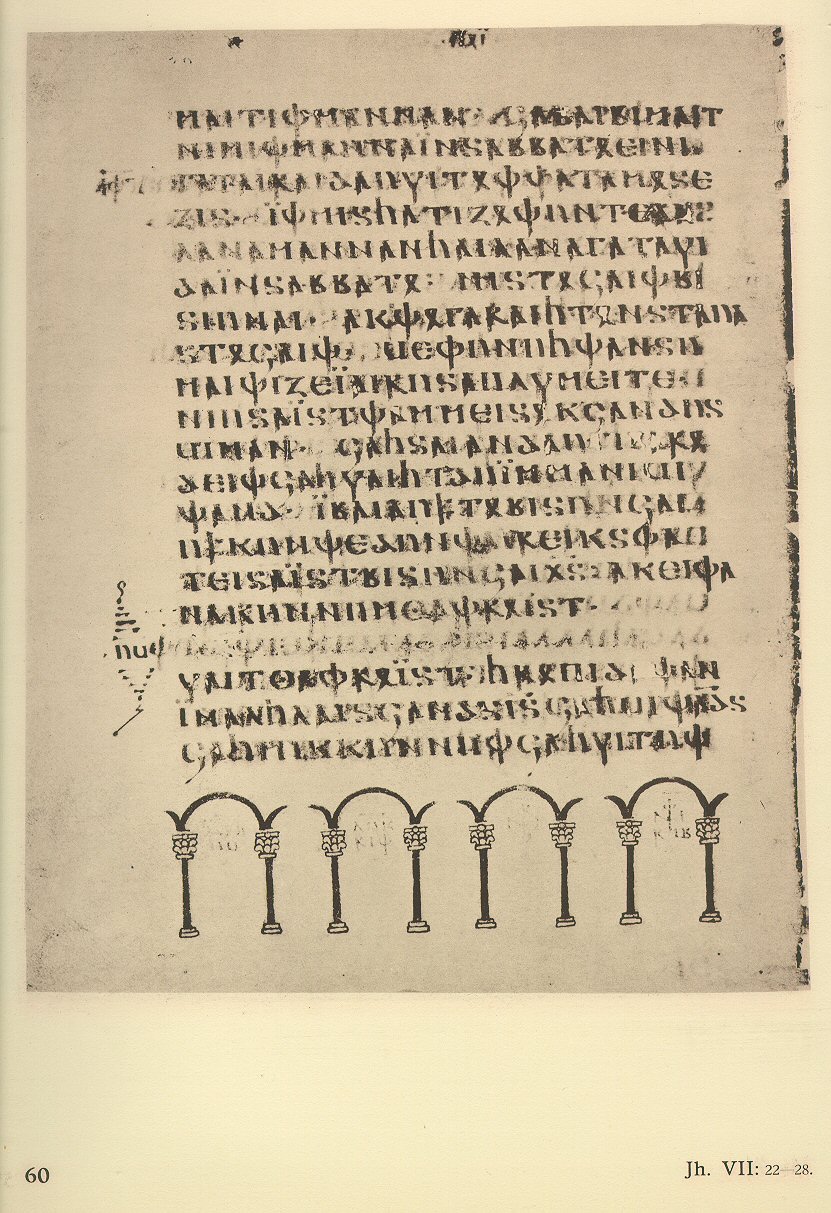
A Gothic weak verb meaning be angry with or at someone, represented by exactly one verified corpus token: present active second-person plural hatizoþ in John 7:23. Project Wulfila and Streitberg align the form with Greek χολᾶτε in the question “are you angry at me?” and analyze the verb with a dative object. The University of Texas derivational grammar builds class-II hatizōn on the consonantal stem hatiz- of hatis “hatred” or “wrath”; Wright independently lists it as a class-II weak verb. The macronized infinitive is a scholarly citation form, while the manuscript writes only the inflected token without a vowel-length mark. The route continues through the reviewed Germanic noun family and a qualified Indo-European comparison, then stops. One corpus token cannot establish spoken rarity, first use, a complete semantic range, exact pronunciation, or one prehistoric essence.
Lineage, to the limit of knowledge
6 steps from today back to *ḱeh₂d- (Proto-Indo-European). An asterisk marks a form reconstructed by comparison, never found written.
- Sound
- The consonantal stem hatiz- of hatis receives the class-II weak-verb formation represented by the citation form hatizōn and the written second-person plural hatizoþ. The long ō is an editorial phonological representation, not a separate manuscript letter.
- Meaning
- A noun for hatred, wrath, or anger supplies a verb whose one surviving context means be angry with or at someone. One token does not establish whether the verb ever carried the noun’s entire semantic range.
- Authority
- Todd B. Krause · Jonathan Slocum · Joseph Wright · Wilhelm Streitberg · Project Wulfila editors
- Confidence
- Independent grammars publish the denominative class-II formation, and the corpus directly supplies one inflected token. The exact historical moment of derivation is not witnessed.
- Chronology
- A Gothic lexical derivation represented in the fourth-century translation tradition and an early-sixth-century manuscript.
- supports Grammar of the Gothic Language — glossary entries hatan, hatis, hatizōn, and hatjan (Joseph Wright, 1910), Glossary p. 326, hatizōn, weak verb II, “to be angry,” §325Independently lists the normalized verb and its conjugation class.
- context Die gotische Bibel — Wörterbuch entry hatis (Wilhelm Streitberg, 1910), p. 55, hatizōn and John 7:23Supplies Streitberg’s historical dictionary entry underlying the current lemma record.
- supports Gothic Online, Lesson 8 — hatis and denominative hatizōn (Todd B. Krause · Jonathan Slocum, 2026), Lesson 8, denominative table: hatis, stem hatiz-, hatizōn “be angry”Publishes the noun, consonantal stem, class-II verb, and semantic derivation in one table.
- supports Lemma hatizon — class-II Gothic verb and one-occurrence inventory (Project Wulfila editors · Wilhelm Streitberg, 2026), Lemma hatizon, sw.V.2, one verified occurrenceIdentifies the corpus lemma, class, government with the dative, and bounded occurrence inventory.
- supports Gothic Bible word analysis — John 7:23, hatizoþ (Project Wulfila editors · Wilhelm Streitberg, 2026), John 7:23, token hatizoþ and morphologySupplies the written inflection and present second-person plural analysis.
- Sound
- Proto-Germanic *hatiz- is represented by Gothic hatis word-finally and by the stem hatiz- before a vowel-initial ending, visible in hatiza. Gothic then regularizes the inherited i-stem into neuter a-stem inflection.
- Meaning
- The inherited anger or hostility noun becomes the Gothic translation choice for Greek wrath vocabulary. That contextual specialization does not prove the noun lacked hatred senses elsewhere.
- Authority
- R. D. Fulk · John T. Koch · Project Wulfila editors
- Confidence
- The Gothic forms and paradigm alternation are attested; the Proto-Germanic parent and the direction of prehistoric remodeling are comparative analyses.
- Chronology
- Proto-Germanic reconstruction into the fourth-century Gothic translation tradition and surviving sixth-century manuscripts.
- supports Die gotische Bibel — Wörterbuch entry hatis (Wilhelm Streitberg, 1910), p. 55, hatis (z), full case-and-context inventoryPublishes the hatis, hatiza, and hatize paradigm and its Greek translation equivalents.
- supports A Comparative Grammar of the Early Germanic Languages — Gothic hatis (R. D. Fulk, 2018), p. 80, §5.2: hatis transferred to the a-stems; compare i-stem Old English hete and Old Saxon hetiIdentifies Gothic a-stem remodeling of an inherited i-stem comparison.
- supports Celto-Germanic — HATRED *kad- (John T. Koch, 2020), p. 101, HATRED *kad-: Proto-Germanic *hataz ~ *hatiz- and Gothic hatisPublishes the Germanic reconstruction and branch comparison.
- Sound
- Under the proposed comparison, Grimm’s Law maps Indo-European *ḱ to Germanic h and *d to Germanic t, while the suffixal formation is remodeled as the Germanic i-stem.
- Meaning
- A proposed grief, pain, care, or hatred formation narrows or develops into the Germanic hate and enmity family.
- Authority
- Merriam-Webster Editors · Anatoly Liberman
- Confidence
- Merriam-Webster says “perhaps” and calls the semantic relations far from transparent; Liberman argues that several proposed non-Germanic cognates may not belong together.
- Chronology
- Proto-Indo-European proposal to Proto-Germanic reconstruction.
- supports Hate — definition, etymology, and first known use (Merriam-Webster Editors, 2026), Noun etymology and semantic notePublishes the qualified PIE comparison and its lack of semantic transparency.
- challenges The shortest history of hatred continued and partly concluded (Anatoly Liberman, 2018), Non-Germanic comparison and conclusionQuestions whether the proposed members form one secure semantic family.
- context Celto-Germanic — HATRED *kad- (John T. Koch, 2020), p. 101, Proto-Indo-European root and Germanic, Celtic, Italic, Iranian, and Greek comparisonsPublishes a wider affirmative comparison that remains visibly qualified by competing scholarship.
- Sound
- The proposed zero-grade or reduced root formation *ḱh₂d-es- is analyzed from the full-grade base *ḱeh₂d- with suffixation.
- Meaning
- The source groups grief, pain, care, mourning, and hatred meanings, but no single original semantic path is promoted.
- Authority
- Merriam-Webster Editors
- Confidence
- The formal analysis is published, while the semantic unity remains expressly difficult.
- Chronology
- Two analytical reconstructed levels, not independently attested spoken tokens.
- supports Hate — definition, etymology, and first known use (Merriam-Webster Editors, 2026), Reconstructed formation and basePublishes the two proposed PIE analytical levels.
- Sound
- No older form or uniquely recoverable concrete meaning is promoted beyond the disputed *ḱeh₂d- proposal.
- Meaning
- The trail ends before the one surviving Gothic anger question is reverse-engineered into a universal origin for anger, hate, grief, care, pursuit, or persecution.
- Authority
- SET-U editorial boundary · Anatoly Liberman
- Confidence
- Secure comparison ends at Germanic; the displayed PIE route remains qualified and semantically unresolved.
- supports Hate — definition, etymology, and first known use (Merriam-Webster Editors, 2026), Semantic-transparency noteMarks the deep comparison as nontransparent.
- supports The shortest history of hatred continued and partly concluded (Anatoly Liberman, 2018), Qualified conclusionSupports stopping rather than inventing a single prehistoric emotional or action scene.
Relatives
| Form | Language | Relation | Source |
|---|---|---|---|
| hatizoþ | Gothic | the only verified corpus token, analyzed as active indicative present second-person plural | Gothic Bible word analysis — John 7:23, hatizoþ |
| hatis | Gothic | the attested noun whose consonantal stem supplies the class-II verb | Gothic Online, Lesson 8 — hatis and denominative hatizōn |
| hatiza | Gothic | a vowel-initial noun form that visibly exposes the stem hatiz- | Die gotische Bibel — Wörterbuch entry hatis |
| hatjan | Gothic | a separate class-I denominative from the hatis stem, meaning hate | Grammar of the Gothic Language — glossary entries hatan, hatis, hatizōn, and hatjan |
| hatan | Gothic | a separate class-III hate verb whose exact relation to the denominatives remains disputed | Grammar of the Gothic Language — glossary entries hatan, hatis, hatizōn, and hatjan |
| χολᾶτε | Ancient Greek | the Greek present second-person plural translated by hatizoþ in John 7:23, not a lexical ancestor | Gothic Bible word analysis — John 7:23, hatizoþ |
| hete | Old English | a cognate noun continuing the Germanic *hatiz- family | Hate — definition, etymology, and first known use |
| heti | Old Saxon | a cognate noun used in the inherited i-stem comparison | A Comparative Grammar of the Early Germanic Languages — Gothic hatis |
| hatr | Old Norse | a cognate noun in the Germanic hate and enmity family | Celto-Germanic — HATRED *kad- |
| Hass | German | a later noun relative connected through the Germanic family, not a descendant of the Gothic verb | Hate — definition, etymology, and first known use |
Journey
- Proto-Germanic linguistic horizon · *hatiz- noun familyThe inherited noun family is reconstructed from attested Germanic comparanda. No archaeological point, single tribe, or attested Proto-Germanic denominative *hatizōn is asserted.
- Gothic translation tradition · hatizōn represented by hatizoþ in John 7:23The fourth-century translation selects the class-II verb for Greek χολᾶτε. The translation horizon is distinct from the age of the surviving manuscript and does not prove when the verb was first formed.
- Ravenna · early-sixth-century Codex ArgenteusThe purple-vellum Gospel codex preserving John 7:23 was probably copied in Ravenna at the beginning of the sixth century.
- Werden, Ruhr district · sixteenth-century manuscript custodyThe codex was known in the sixteenth century at a Benedictine monastery in Werden. This traces the evidence object, not spoken Gothic.
- Prague · imperial custody by 1600 to 1648By 1600 the codex was in Prague in the hands of Emperor Rudolph II; Swedish forces took it when they stormed the city in 1648.
- Stockholm · Swedish royal custody after 1648The codex reached Stockholm as spoil of war and entered Queen Christina’s library before passing to Isaac Vossius.
- Holland custody · Isaac Vossius and acquisition by De la GardieVossius took the manuscript to Holland; Magnus Gabriel De la Gardie later bought it and presented it to Uppsala University.
- Uppsala University Library · custody since 1669De la Gardie presented the codex to Uppsala University in 1669. Modern editions expose the folio preserving hatizoþ.
- Knowledge boundary · beyond secure Germanic reconstructionThe qualified Indo-European comparison remains visible, but no single anger, wrath, hatred, grief, care, bile, persecution, or pursuit origin is promoted.
Disputes
Is the normalized infinitive hatizōn written in the surviving manuscript?
No. The manuscript token is hatizoþ. Hatizōn is the lexicographic citation form reconstructed from the inflectional paradigm and printed by the historical grammars.
resolved · confidence: established · The interface labels the lemma attested through an inflected token and never quotes the infinitive as manuscript text.
- supports Lemma hatizon — class-II Gothic verb and one-occurrence inventory (Project Wulfila editors · Wilhelm Streitberg, 2026), Lemma hatizon and occurrence hatizoþDistinguishes the normalized citation form from the written token.
- supports Gothic Bible word analysis — John 7:23, hatizoþ (Project Wulfila editors · Wilhelm Streitberg, 2026), John 7:23, token hatizoþSupplies the exact inflected form.
- supports Codex Argenteus facsimile 60 — folio 94v, John 7:22–28 (Uppsala University Library · Project Codex Argenteus Online, 1927), Folio 94v, line containing iþ mis hatizoþProvides the directly inspected manuscript pixels.
Does the current Project Wulfila corpus contain exactly one verified occurrence?
Yes. The lemma page lists only John 7:23 hatizoþ. This is a bounded statement about the current surviving corpus, not all historical Gothic.
resolved · confidence: established · Every count names the corpus and does not become a speech-frequency claim.
- supports Lemma hatizon — class-II Gothic verb and one-occurrence inventory (Project Wulfila editors · Wilhelm Streitberg, 2026), Occurrences: one verified John 7:23 tokenDefines the bounded current corpus count.
What does the surviving token mean in context?
It asks whether the audience is angry at Jesus. Project Wulfila aligns hatizoþ with Greek χολᾶτε and English “are ye angry at me”; Streitberg and Wright gloss the verb with anger rather than a general act of hating.
resolved · confidence: established · The dossier says be angry with or at someone and leaves any unattested broader range open.
- supports Grammar of the Gothic Language — glossary entries hatan, hatis, hatizōn, and hatjan (Joseph Wright, 1910), Glossary p. 326, hatizōn “to be angry”Supplies an independent historical-grammar gloss.
- supports Die gotische Bibel — Wörterbuch entry hatis (Wilhelm Streitberg, 1910), p. 55, hatizōn and John 7:23Supplies Streitberg’s lexical gloss and verse locator.
- supports Gothic Bible word analysis — John 7:23, hatizoþ (Project Wulfila editors · Wilhelm Streitberg, 2026), John 7:23, Greek χολᾶτε and English are ye angry at meAnchors the contextual anger reading.
Was hatizōn formed from hatis?
Yes as the reviewed grammatical analysis. The University of Texas table explicitly gives hatis, stem hatiz-, and hatizōn; Wright independently classifies the verb as weak class II.
resolved · confidence: established · The graph models derivation from the noun without pretending one surviving noun token chronologically caused the verb token.
- supports Grammar of the Gothic Language — glossary entries hatan, hatis, hatizōn, and hatjan (Joseph Wright, 1910), Glossary p. 326, weak verb IIIndependently classifies the verb.
- supports Gothic Online, Lesson 8 — hatis and denominative hatizōn (Todd B. Krause · Jonathan Slocum, 2026), Lesson 8, hatis → hatiz- → hatizōnPublishes the explicit denominative formation.
- supports Lemma hatizon — class-II Gothic verb and one-occurrence inventory (Project Wulfila editors · Wilhelm Streitberg, 2026), Lemma hatizon, sw.V.2Confirms the current corpus inflection class.
Does the manuscript write the macron in hatizōn?
No. Gothic spelling on the inspected folio writes hatizoþ without a macron. The macron in the scholarly citation form represents analyzed vowel length.
resolved · confidence: established · Display typography keeps editorial length notation distinct from manuscript characters.
- supports Codex Argenteus facsimile 60 — folio 94v, John 7:22–28 (Uppsala University Library · Project Codex Argenteus Online, 1927), Folio 94v, visible hatizoþProvides the manuscript spelling without an editorial macron.
- context Gothic Online, Lesson 8 — hatis and denominative hatizōn (Todd B. Krause · Jonathan Slocum, 2026), Lesson 8, macronized hatizōnProvides scholarly vowel-length notation.
Is hatizoþ second-person plural present indicative?
Project Wulfila analyzes it as active indicative present second-person plural. The pixels verify the form, while the grammatical label remains an editorial morphological analysis.
resolved · confidence: established · The witness note separates visible letters from grammatical interpretation.
- supports Gothic Bible word analysis — John 7:23, hatizoþ (Project Wulfila editors · Wilhelm Streitberg, 2026), Token morphology: active indicative present second-person pluralSupplies the grammatical parse.
- context Codex Argenteus facsimile 60 — folio 94v, John 7:22–28 (Uppsala University Library · Project Codex Argenteus Online, 1927), Folio 94v, visible tokenSupports the written form but not the morphology by pixels alone.
Is Greek χολᾶτε an ancestor of Gothic hatizōn?
No. It is the Greek source-text form translated by the Gothic verb in John 7:23. Translation equivalence is contextual evidence, not lexical descent or borrowing.
resolved · confidence: established · The Greek form appears as a relative/context record and never as a canonical parent edge.
- supports Gothic Online, Lesson 8 — hatis and denominative hatizōn (Todd B. Krause · Jonathan Slocum, 2026), Denominative derivation from hatisSupplies the actual lexical formation.
- supports Gothic Bible word analysis — John 7:23, hatizoþ (Project Wulfila editors · Wilhelm Streitberg, 2026), Aligned Gothic and Greek text in John 7:23Shows translation equivalence rather than ancestry.
Does one surviving token prove the verb was rare in spoken Gothic?
No. It proves only that the current surviving and verified corpus contains one assigned token. The fragmentary manuscript record cannot measure ordinary speech.
resolved · confidence: established · The leaderboard says one surviving corpus token, never one historical utterance.
- supports Lemma hatizon — class-II Gothic verb and one-occurrence inventory (Project Wulfila editors · Wilhelm Streitberg, 2026), One verified occurrence inventoryBounds the corpus claim.
- context Archivum Gothicum: Edition of the Gothic Sources, Volume 1 (Carla Falluomini · Pierandrea Gottardi, 2026), Gothic source and manuscript inventoryDocuments the limited surviving record.
Is John 7:23 the first Gothic use of the verb?
Not established. The translation belongs to a fourth-century tradition, the surviving codex is early sixth century, and no complete lost-text or spoken-language archive exists.
open · confidence: established
- supports Gothic Bible word analysis — John 7:23, hatizoþ (Project Wulfila editors · Wilhelm Streitberg, 2026), John 7:23 corpus and manuscript locatorLocates the extant token without calling it first use.
- context The history of Codex argenteus (Uppsala University Library, 2026), Codex Argenteus translation and manuscript historySeparates the fourth-century translation from the early-sixth-century object.
Can one exact spoken pronunciation be recovered?
No recorded voice survives. The macron and grammatical spelling support a historical phonological analysis, but they do not license an audio-like exact realization.
open · confidence: established
- supports Grammar of the Gothic Language — glossary entries hatan, hatis, hatizōn, and hatjan (Joseph Wright, 1910), Macronized glossary form and grammatical classProvides historical notation without acoustic evidence and therefore supports the stated acoustic limit.
- context Codex Argenteus facsimile 60 — folio 94v, John 7:22–28 (Uppsala University Library · Project Codex Argenteus Online, 1927), Written manuscript tokenProvides letters rather than recorded speech.
How does hatizōn relate to Gothic hatjan and hatan?
The reviewed sources distinguish class-II hatizōn, class-I hatjan, and class-III hatan. Hatis clearly supports two denominatives, while the precise historical relationship among all three verb systems remains disputed.
open · confidence: probable
- supports Grammar of the Gothic Language — glossary entries hatan, hatis, hatizōn, and hatjan (Joseph Wright, 1910), Glossary entries hatan, hatis, hatizōn, and hatjanLists the distinct lexical citation forms and classes.
- supports Gothic Online, Lesson 8 — hatis and denominative hatizōn (Todd B. Krause · Jonathan Slocum, 2026), Lesson 8, hatis and hatizōn derivationIdentifies the class-II denominative.
- challenges A Gothic Grammar with Selections for Reading and a Glossary — hatan and hatjan (Wilhelm Braune · translated and edited by Gerhard H. Balg, 1895), §193 note and glossary p. 170, hatan and hatjanShows a tighter fluctuation analysis for two parts of the broader system.
Does hatizōn securely descend from *ḱeh₂d-?
Only through the noun family’s qualified proposal. The Germanic derivation from hatis is firmer than the deeper comparison, whose grief, care, mourning, love, hatred, and anger fields do not form one transparent sequence.
open · confidence: probable
- supports Hate — definition, etymology, and first known use (Merriam-Webster Editors, 2026), Noun etymology and semantic notePublishes the PIE proposal with explicit qualification.
- challenges The shortest history of hatred continued and partly concluded (Anatoly Liberman, 2018), Non-Germanic comparison and conclusionQuestions the semantic unity and membership of the deeper comparison.
Witnesses
- early 6th century Codex Argenteus, John 7:23, DG 1, fol. 94v; facsimile 60; John 7:23; line containing “iþ mis hatizoþ”
directly inspected“iþ mis hatizoþ, unte allana mannan hailana gatawida in sabbato?”manuscript · Uppsala University Library · DG 1, fol. 94v · facsimile · Codex Argenteus facsimile 60 — folio 94v, John 7:22–28
Data for this word: every dataset (JSON, CSV, SQLite).