hatis
/ˈha.tis/ · Gothic neuter noun
A Gothic noun conventionally glossed hate, hatred, anger, or wrath. Project Wulfila reports fifteen corpus tokens in three surface forms: hatis, hatiza, and hatize. Its fourteen biblical tokens translate Greek wrath vocabulary rather than supplying a clean mirror of modern personal dislike: Streitberg maps the family chiefly to orgē, assigns Galatians 5:20 to thumos, and leaves Ephesians 4:31 unresolved because both Greek nouns stand together. The visible Gothic paradigm is also historical evidence: Project Wulfila treats hatis as a neuter a-stem, while Fulk analyzes it as an inherited i-stem transferred to the a-stems.
Lineage, to the limit of knowledge
5 steps from today back to *ḱeh₂d- (Proto-Indo-European). An asterisk marks a form reconstructed by comparison, never found written.
- Sound
- Proto-Germanic *hatiz- is represented by Gothic hatis word-finally and by the stem hatiz- before a vowel-initial ending, visible in hatiza. Gothic then regularizes the inherited i-stem into neuter a-stem inflection.
- Meaning
- The inherited anger or hostility noun becomes the Gothic translation choice for Greek wrath vocabulary. That contextual specialization does not prove the noun lacked hatred senses elsewhere.
- Authority
- R. D. Fulk · John T. Koch · Project Wulfila editors
- Confidence
- The Gothic forms and paradigm alternation are attested; the Proto-Germanic parent and the direction of prehistoric remodeling are comparative analyses.
- Chronology
- Proto-Germanic reconstruction into the fourth-century Gothic translation tradition and surviving sixth-century manuscripts.
- supports Lemma hatis — Gothic dictionary and fifteen-token occurrence inventory (Project Wulfila editors · Wilhelm Streitberg, 2026), Lemma hatis, neuter a-stem classification and fifteen-token occurrence inventorySupplies the synchronic corpus lemma, inflection class, and complete current occurrence count.
- supports Die gotische Bibel — Wörterbuch entry hatis (Wilhelm Streitberg, 1910), p. 55, hatis (z), full case-and-context inventoryPublishes the hatis, hatiza, and hatize paradigm and its Greek translation equivalents.
- supports A Comparative Grammar of the Early Germanic Languages — Gothic hatis (R. D. Fulk, 2018), p. 80, §5.2: hatis transferred to the a-stems; compare i-stem Old English hete and Old Saxon hetiIdentifies Gothic a-stem remodeling of an inherited i-stem comparison.
- supports Celto-Germanic — HATRED *kad- (John T. Koch, 2020), p. 101, HATRED *kad-: Proto-Germanic *hataz ~ *hatiz- and Gothic hatisPublishes the Germanic reconstruction and branch comparison.
- Sound
- Under the proposed comparison, Grimm’s Law maps Indo-European *ḱ to Germanic h and *d to Germanic t, while the suffixal formation is remodeled as the Germanic i-stem.
- Meaning
- A proposed grief, pain, care, or hatred formation narrows or develops into the Germanic hate and enmity family.
- Authority
- Merriam-Webster Editors · Anatoly Liberman
- Confidence
- Merriam-Webster says “perhaps” and calls the semantic relations far from transparent; Liberman argues that several proposed non-Germanic cognates may not belong together.
- Chronology
- Proto-Indo-European proposal to Proto-Germanic reconstruction.
- supports Hate — definition, etymology, and first known use (Merriam-Webster Editors, 2026), Noun etymology and semantic notePublishes the qualified PIE comparison and its lack of semantic transparency.
- challenges The shortest history of hatred continued and partly concluded (Anatoly Liberman, 2018), Non-Germanic comparison and conclusionQuestions whether the proposed members form one secure semantic family.
- context Celto-Germanic — HATRED *kad- (John T. Koch, 2020), p. 101, Proto-Indo-European root and Germanic, Celtic, Italic, Iranian, and Greek comparisonsPublishes a wider affirmative comparison that remains visibly qualified by competing scholarship.
- Sound
- The proposed zero-grade or reduced root formation *ḱh₂d-es- is analyzed from the full-grade base *ḱeh₂d- with suffixation.
- Meaning
- The source groups grief, pain, care, mourning, and hatred meanings, but no single original semantic path is promoted.
- Authority
- Merriam-Webster Editors
- Confidence
- The formal analysis is published, while the semantic unity remains expressly difficult.
- Chronology
- Two analytical reconstructed levels, not independently attested spoken tokens.
- supports Hate — definition, etymology, and first known use (Merriam-Webster Editors, 2026), Reconstructed formation and basePublishes the two proposed PIE analytical levels.
- Sound
- No older form or uniquely recoverable concrete meaning is promoted beyond the disputed *ḱeh₂d- proposal.
- Meaning
- The trail ends before the surviving Gothic wrath tokens are reverse-engineered into a universal origin for hate, grief, care, pursuit, or persecution.
- Authority
- SET-U editorial boundary · Anatoly Liberman
- Confidence
- Secure comparison ends at Germanic; the displayed PIE route remains qualified and semantically unresolved.
- supports Hate — definition, etymology, and first known use (Merriam-Webster Editors, 2026), Semantic-transparency noteMarks the deep comparison as nontransparent.
- supports The shortest history of hatred continued and partly concluded (Anatoly Liberman, 2018), Qualified conclusionSupports stopping rather than inventing a single prehistoric emotional or action scene.
Relatives
| Form | Language | Relation | Source |
|---|---|---|---|
| hatiza | Gothic | the vowel-initial stem form used as dative singular and nominative plural in the surviving corpus | Die gotische Bibel — Wörterbuch entry hatis |
| hatize | Gothic | the Ephesians 2:3 A genitive form whose exact paradigm analysis remains disputed | Gothic Bible word analysis — Ephesians 2:3, hatize and hatis |
| hatjan | Gothic | a class-I weak hate verb derived from the consonantal hatis stem in historical grammar | A Gothic Grammar with Selections for Reading and a Glossary — hatan and hatjan |
| hatizōn | Gothic | a class-II denominative verb built on hatiz- and glossed be angry | Gothic Online, Lesson 8 — hatis and denominative hatizōn |
| hatan | Gothic | the parallel class-III hate verb kept distinct from the noun-derived formations | Grammar of the Gothic Language — glossary entries hatan, hatis, hatizōn, and hatjan |
| hete | Old English | the inherited i-stem noun cognate that becomes a full Old English dossier | A Comparative Grammar of the Early Germanic Languages — Gothic hatis |
| hate | English | the modern English noun and verb family reached through the Old English branch | Hate — definition, etymology, and first known use |
| hatr | Old Norse | a Germanic noun cognate meaning hatred or persecution | Celto-Germanic — HATRED *kad- |
| hata | Old Norse | a Germanic hate verb in the wider family | A Handbook of Germanic Etymology — *xataz, *xatjanan, and *xatōjanan |
| hāt | Old Frisian | a West Germanic noun cognate meaning hate | Celto-Germanic — HATRED *kad- |
| hatia | Old Frisian | a West Germanic cognate verb meaning hate | Celto-Germanic — HATRED *kad- |
| heti | Old Saxon | the inherited i-stem noun compared directly with Gothic hatis | A Comparative Grammar of the Early Germanic Languages — Gothic hatis |
| hatan | Old Saxon | a West Germanic hate verb listed in the wider comparison | Celto-Germanic — HATRED *kad- |
| haz | Old High German | the High German hate noun ancestral to modern Hass | Celto-Germanic — HATRED *kad- |
| hazzōn | Old High German | a Germanic class-II hate verb in the wider family | A Handbook of Germanic Etymology — *xataz, *xatjanan, and *xatōjanan |
| Hass | German | the modern German hate noun continuing Old High German haz | HETE — An Anglo-Saxon Dictionary Online |
| cais | Middle Irish | a proposed Celtic cognate with the remarkable paired gloss love and hatred | Celto-Germanic — HATRED *kad- |
| cas | Old Welsh | a proposed Celtic cognate meaning hatred or enmity | Celto-Germanic — HATRED *kad- |
| κῆδος | Ancient Greek | a proposed deeper comparison meaning care, anxiety, or pain rather than modern hate | Celto-Germanic — HATRED *kad- |
Journey
- Proto-Germanic linguistic horizon · *hatiz-The Gothic noun, i-stem Old English hete and Old Saxon heti, and the wider Germanic cognate set support a comparative noun base without licensing one archaeological point or directly written Proto-Germanic token.
- Fourth-century Gothic translation tradition · hatis in Gothic biblical vocabularyFourteen of the fifteen reported tokens belong to the Gothic Bible tradition. Their Greek alignment reveals translation choices but does not date the first use of the noun in speech.
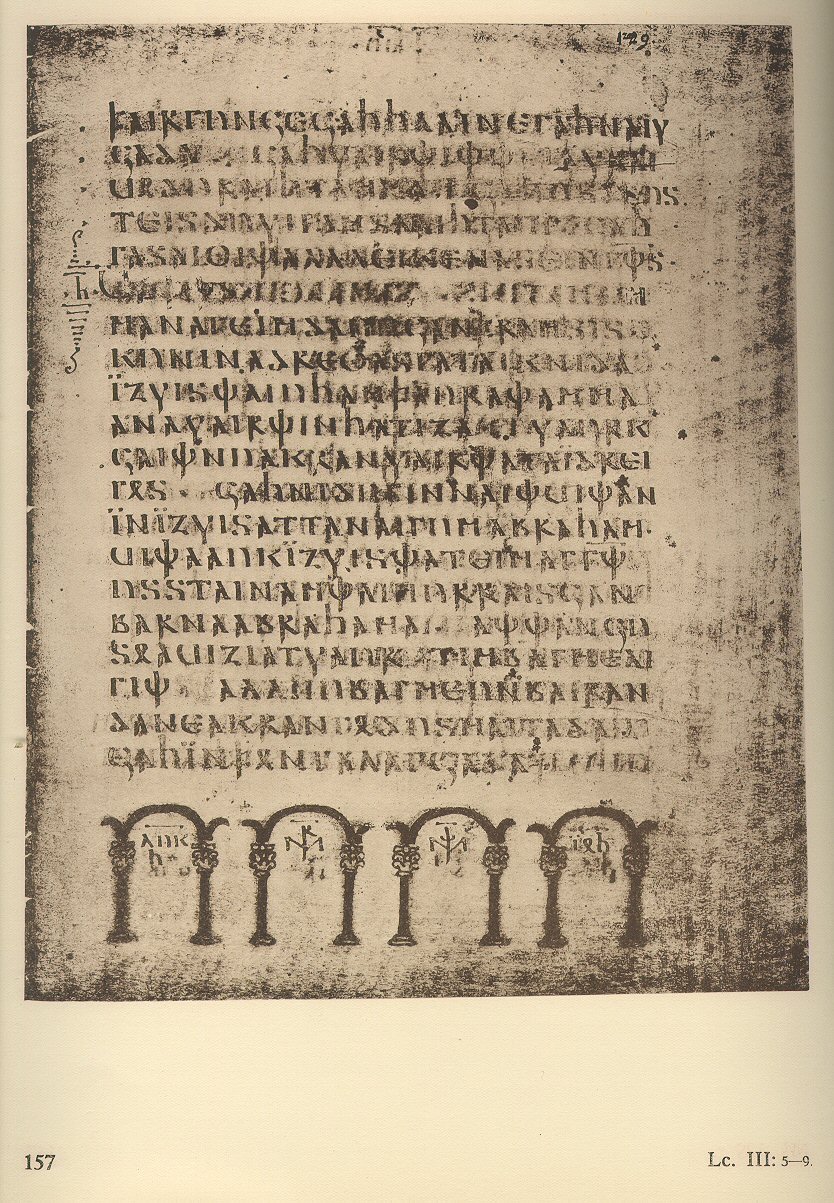
- Ravenna · early-sixth-century Codex Argenteus witnessThe directly inspected Luke 3:7 hatiza occurs in the purple-vellum Gospel codex probably copied in Ravenna. The remaining source-reported tokens survive in other Gothic witnesses and are not silently assigned to this object.
- Werden, Ruhr district · sixteenth-century Codex Argenteus custodyThe directly inspected codex was known in the sixteenth century at a Benedictine monastery in Werden. This is the route of one evidence object, not proof that spoken Gothic traveled with it.
- Prague · imperial custody by 1600 to 1648By 1600 the Codex Argenteus was in Prague in the hands of Emperor Rudolph II; Swedish forces took it when they stormed the city in 1648.
- Stockholm · Swedish royal custody after 1648The codex reached Stockholm as spoil of war and entered Queen Christina’s library before passing to Isaac Vossius.
- Holland custody · Isaac Vossius and acquisition by De la GardieVossius took the manuscript to Holland; Magnus Gabriel De la Gardie later bought it and presented it to Uppsala University.
- Uppsala University Library · custody since 1669De la Gardie presented the codex to Uppsala University in 1669. The modern facsimile exposes folio 129r, while Project Wulfila links the wider Gothic corpus inventory.
- Knowledge boundary · beyond secure Germanic reconstructionThe proposed Indo-European and Celtic comparisons remain visible, but no single hate, wrath, grief, care, pain, or anxiety origin is promoted.
Disputes
Does Gothic hatis simply mean the modern emotion hate?
No. Hatred remains a legitimate dictionary gloss, but the surviving biblical tokens do different translation work: Streitberg maps the noun chiefly to Greek orgē, maps Galatians 5:20 to thumos, and flags Ephesians 4:31 because both Greek wrath nouns are adjacent.
resolved · confidence: established · The dossier leads with hatred, anger, or wrath and exposes each contextual alignment instead of selecting one timeless English equivalent.
- supports Gothic Bible word analysis — Luke 3:7, hatiza (Project Wulfila editors · Wilhelm Streitberg, 2026), Luke 3:7, anawairþin hatiza aligned with Greek orgē and translated wrath to comeAnchors the directly inspected token in a future-wrath clause.
- supports Die gotische Bibel — Wörterbuch entry hatis (Wilhelm Streitberg, 1910), p. 55, hatis: thumos in Galatians 5:20; otherwise orgē; Ephesians 4:31 doubtfulPublishes the contextual Greek-equivalent distribution rather than a single timeless gloss.
- supports Gothic Bible word analysis — Colossians 3:6, hatis (Project Wulfila editors · Wilhelm Streitberg, 2026), Colossians 3:6, hatis gudis aligned with Greek orgē tou theouDocuments the divine-wrath context.
Does the corpus contain exactly fifteen historical uses of hatis?
Project Wulfila currently reports exactly fifteen surviving corpus tokens assigned to the lemma. That is an inventory claim, not a total for spoken Gothic, lost manuscripts, spelling variants outside the corpus, or every historical use.
resolved · confidence: established · Every count is explicitly bounded to the current reported corpus.
- supports Lemma hatis — Gothic dictionary and fifteen-token occurrence inventory (Project Wulfila editors · Wilhelm Streitberg, 2026), Complete occurrence inventory: fifteen tokens under hatisDefines the exact bounded corpus count.
- context Archivum Gothicum: Edition of the Gothic Sources, Volume 1 (Carla Falluomini · Pierandrea Gottardi, 2026), Gothic source and manuscript inventoryDocuments the limited survival base that prevents a total historical-use claim.
Was hatis an inherited i-stem or a Gothic neuter a-stem?
Both descriptions operate at different historical levels. Project Wulfila classifies the surviving Gothic paradigm as a neuter a-stem; Fulk treats hatis as an inherited i-stem transferred to the a-stems and compares Old English hete and Old Saxon heti.
resolved · confidence: probable · The root trail states inherited i-stem and Gothic a-stem remodeling in the same cited edge.
- supports Lemma hatis — Gothic dictionary and fifteen-token occurrence inventory (Project Wulfila editors · Wilhelm Streitberg, 2026), Neuter a-stem classificationSupplies the synchronic Gothic paradigm label.
- supports A Comparative Grammar of the Early Germanic Languages — Gothic hatis (R. D. Fulk, 2018), p. 80, hatis transferred to the a-stems; compare i-stem hete and hetiSupplies the diachronic i-stem analysis.
How should Ephesians 2:3 hatize and hatis be parsed?
The witnesses disagree in form and the analytical layers disagree in labeling. Project Wulfila’s current morphology lists A hatize as genitive plural and B hatis as nominative or accusative singular; Braune calls B hatis a consonantal genitive beside A hatizē, while Streitberg’s later teaching glossary calls genitive hatis erroneous.
open · confidence: probable
- supports A Gothic Grammar with Selections for Reading and a Glossary — hatan and hatjan (Wilhelm Braune · translated and edited by Gerhard H. Balg, 1895), §94 note 5: B hatis as a consonantal genitive beside A hatizēPublishes the historical-grammar treatment of the B form.
- supports Gothic Bible word analysis — Ephesians 2:3, hatize and hatis (Project Wulfila editors · Wilhelm Streitberg, 2026), Ephesians 2:3 A hatize and B hatis with current morphological analysesPublishes the two witness readings and the analyzer’s different case outputs.
- challenges Die gotische Bibel — Wörterbuch entry hatis (Wilhelm Streitberg, 1910), p. 55, genitive hatis B beside -ize A; teaching glossary marks genitive hatis erroneousPreserves a later pedagogical judgment that prevents false closure.
Does hatis underlie Gothic hatjan and hatizōn?
Historical grammar derives class-I hatjan from the consonantal stem of hatis, and the University of Texas derivational table builds class-II hatizōn “be angry” directly on hatiz-. The separate class-III hatan remains a wider paradigm and reconstruction problem rather than a proved direct daughter of this noun.
resolved · confidence: probable · The relatives and rabbit hole expose two documented denominatives and label the third verb separately.
- supports A Gothic Grammar with Selections for Reading and a Glossary — hatan and hatjan (Wilhelm Braune · translated and edited by Gerhard H. Balg, 1895), Glossary p. 170, hatjan from the consonantal stem of hatisPublishes the class-I noun-to-verb derivation.
- supports Gothic Online, Lesson 8 — hatis and denominative hatizōn (Todd B. Krause · Jonathan Slocum, 2026), Lesson 8, second weak conjugation table: hatis, stem hatiz-, hatizōnPublishes the class-II denominative formation and meaning be angry.
- context A Handbook of Germanic Etymology — *xataz, *xatjanan, and *xatōjanan (Vladimir Orel, 2003), Separate *xatjanan and *xatēnan ~ *xatōjanan entriesKeeps the wider class-I and class-III reconstruction distinction visible.
Does Galatians 5:20 prove hatis always meant explosive anger?
No single verse can establish an invariant meaning. Galatians aligns plural hatiza with Greek thumoi, while other biblical contexts use orgē and Ephesians 4:31 does not permit a clean one-to-one choice. The exact semantic center of ordinary Gothic remains underdetermined by translation texts.
open · confidence: probable
- supports Die gotische Bibel — Wörterbuch entry hatis (Wilhelm Streitberg, 1910), p. 55, thumos only at Galatians 5:20; otherwise orgē with Ephesians 4:31 doubtfulDemonstrates why one verse cannot define the entire semantic field.
- supports Gothic Bible word analysis — Galatians 5:20, hatiza (Project Wulfila editors · Wilhelm Streitberg, 2026), Galatians 5:20 A and B hatiza aligned with Greek thumoiShows the plural token in the wrath-list context.
Do Celtic cais and cas make the deep Indo-European route secure?
Not by themselves. Koch publishes Proto-Celtic *katsi- and a wider *kad- comparison, but Middle Irish cais itself carries both love and hatred, and Liberman challenges whether several non-Germanic comparisons form one transparent family.
open · confidence: proposed
- supports Celto-Germanic — HATRED *kad- (John T. Koch, 2020), p. 101, Proto-Celtic *katsi-, Middle Irish cais, Old Welsh cas, and PIE root comparisonPublishes the affirmative Celtic and Indo-European comparison.
- challenges The shortest history of hatred continued and partly concluded (Anatoly Liberman, 2018), Non-Germanic comparison and semantic conclusionQuestions whether the deeper comparisons belong to one secure semantic family.
Do the surviving token counts measure spoken Gothic frequency?
No. Fifteen reported corpus tokens measure a bounded textual survival, heavily shaped by biblical translation and manuscript loss. They cannot estimate how often Goths used the noun, its competing synonyms, or its everyday senses.
resolved · confidence: established · The interface calls them corpus tokens and never historical uses or a speech-frequency sample.
- supports Lemma hatis — Gothic dictionary and fifteen-token occurrence inventory (Project Wulfila editors · Wilhelm Streitberg, 2026), Fifteen-token occurrence inventoryDefines what the count actually measures.
- context Archivum Gothicum: Edition of the Gothic Sources, Volume 1 (Carla Falluomini · Pierandrea Gottardi, 2026), Gothic source and manuscript inventoryDocuments the fragmentary textual record.
Does the Codex Argenteus custody route map the spread of hatis?
No. It maps the custody of the directly inspected evidence object. The manuscript traveled through Werden, Prague, Stockholm, Holland, and Uppsala long after Gothic ceased to be a living vernacular in those places; the other hatis tokens survive in separate witnesses.
resolved · confidence: established · Every post-Ravenna journey note explicitly labels manuscript custody rather than lexical diffusion.
- supports The history of Codex argenteus (Uppsala University Library, 2026), Codex argenteus’ journeyDocuments the custody route from Werden to Uppsala.
- supports Lemma hatis — Gothic dictionary and fifteen-token occurrence inventory (Project Wulfila editors · Wilhelm Streitberg, 2026), Occurrence inventory across CA, A, B, and Lat5750 witnessesShows that the dossier’s tokens do not all belong to the inspected codex.
Witnesses
- Gothic manuscript corpus, date not normalized Codex Ambrosianus A corpus record, Ephesians 2:3, Ephesians 2:3 [A], barna hatize
source-reported“barna hatize”lexical_corpus_record · Gothic Bible word analysis — Ephesians 2:3, hatize and hatis
- Gothic manuscript corpus, date not normalized Codex Ambrosianus B corpus record, Ephesians 2:3, Ephesians 2:3 [B], barna hatis
source-reported“barna hatis”lexical_corpus_record · Gothic Bible word analysis — Ephesians 2:3, hatize and hatis
- Gothic manuscript corpus, date not normalized Codex Ambrosianus A corpus record, Ephesians 4:31, Ephesians 4:31 [A], alla baitrei jah hatis jah þwairhei
source-reported“alla baitrei jah hatis jah þwairhei”lexical_corpus_record · Gothic Bible word analysis — Ephesians 4:31, hatis
- Gothic manuscript corpus, date not normalized Codex Ambrosianus B corpus record, Ephesians 4:31, Ephesians 4:31 [B], alla baitrei jah hatis jah þwairhei
source-reported“alla baitrei jah hatis jah þwairhei”lexical_corpus_record · Gothic Bible word analysis — Ephesians 4:31, hatis
- Gothic manuscript corpus, date not normalized Codex Ambrosianus B corpus record, Ephesians 5:6, Ephesians 5:6 [B], qimiþ hatis gudis
source-reported“qimiþ hatis gudis”lexical_corpus_record · Gothic Bible word analysis — Ephesians 5:6, hatis
- Gothic manuscript corpus, date not normalized Codex Ambrosianus A corpus record, Galatians 5:20, Galatians 5:20 [A], aljan, hatiza, jiukos
source-reported“aljan, hatiza, jiukos”lexical_corpus_record · Gothic Bible word analysis — Galatians 5:20, hatiza
- Gothic manuscript corpus, date not normalized Codex Ambrosianus B corpus record, Galatians 5:20, Galatians 5:20 [B], aljan, hatiza, jiukos
source-reported“aljan, hatiza, jiukos”lexical_corpus_record · Gothic Bible word analysis — Galatians 5:20, hatiza
- Gothic manuscript corpus, date not normalized Codex Ambrosianus A corpus record, Colossians 3:6, Colossians 3:6 [A], qimiþ hatis gudis
source-reported“qimiþ hatis gudis”lexical_corpus_record · Gothic Bible word analysis — Colossians 3:6, hatis
- Gothic manuscript corpus, date not normalized Codex Ambrosianus B corpus record, Colossians 3:6, Colossians 3:6 [B], qimiþ hatis gudis
source-reported“qimiþ hatis gudis”lexical_corpus_record · Gothic Bible word analysis — Colossians 3:6, hatis
- Gothic manuscript corpus, date not normalized Codex Ambrosianus A corpus record, Colossians 3:8, Colossians 3:8 [A], hatis, þwairhein, unselein
source-reported“hatis, þwairhein, unselein”lexical_corpus_record · Gothic Bible word analysis — Colossians 3:8, hatis
- Gothic manuscript corpus, date not normalized Codex Ambrosianus B corpus record, Colossians 3:8, Colossians 3:8 [B], hatis, þwairhein, unselein
source-reported“hatis, þwairhein, unselein”lexical_corpus_record · Gothic Bible word analysis — Colossians 3:8, hatis
- Gothic manuscript corpus, date not normalized Codex Ambrosianus B corpus record, 1 Thessalonians 2:16, 1 Thessalonians 2:16 [B], hatis
source-reported“hatis”lexical_corpus_record · Gothic Bible word analysis — 1 Thessalonians 2:16, hatis
- Gothic manuscript corpus, date not normalized Codex Ambrosianus B corpus record, 1 Thessalonians 5:9, 1 Thessalonians 5:9 [B], ni satida uns guþ in hatis
source-reported“ni satida uns guþ in hatis”lexical_corpus_record · Gothic Bible word analysis — 1 Thessalonians 5:9, hatis
- Gothic manuscript corpus, date not normalized Skeireins Lat5750 corpus record, 8:5, Skeireins 8:5 [Lat5750], miþ hatiza andhofun
source-reported“miþ hatiza andhofun”lexical_corpus_record · Skeireins word analysis — 8:5, hatiza
- early 6th century Codex Argenteus, Luke 3:7, DG 1, fol. 129r; facsimile 157; Luke 3:7; line 10 ending “anawairþin hatiza”
directly inspected“þliuhan faura þamma anawairþin hatiza”manuscript · Uppsala University Library · DG 1, fol. 129r · facsimile · Codex Argenteus facsimile 157 — folio 129r, Luke 3:5–9
Data for this word: every dataset (JSON, CSV, SQLite).